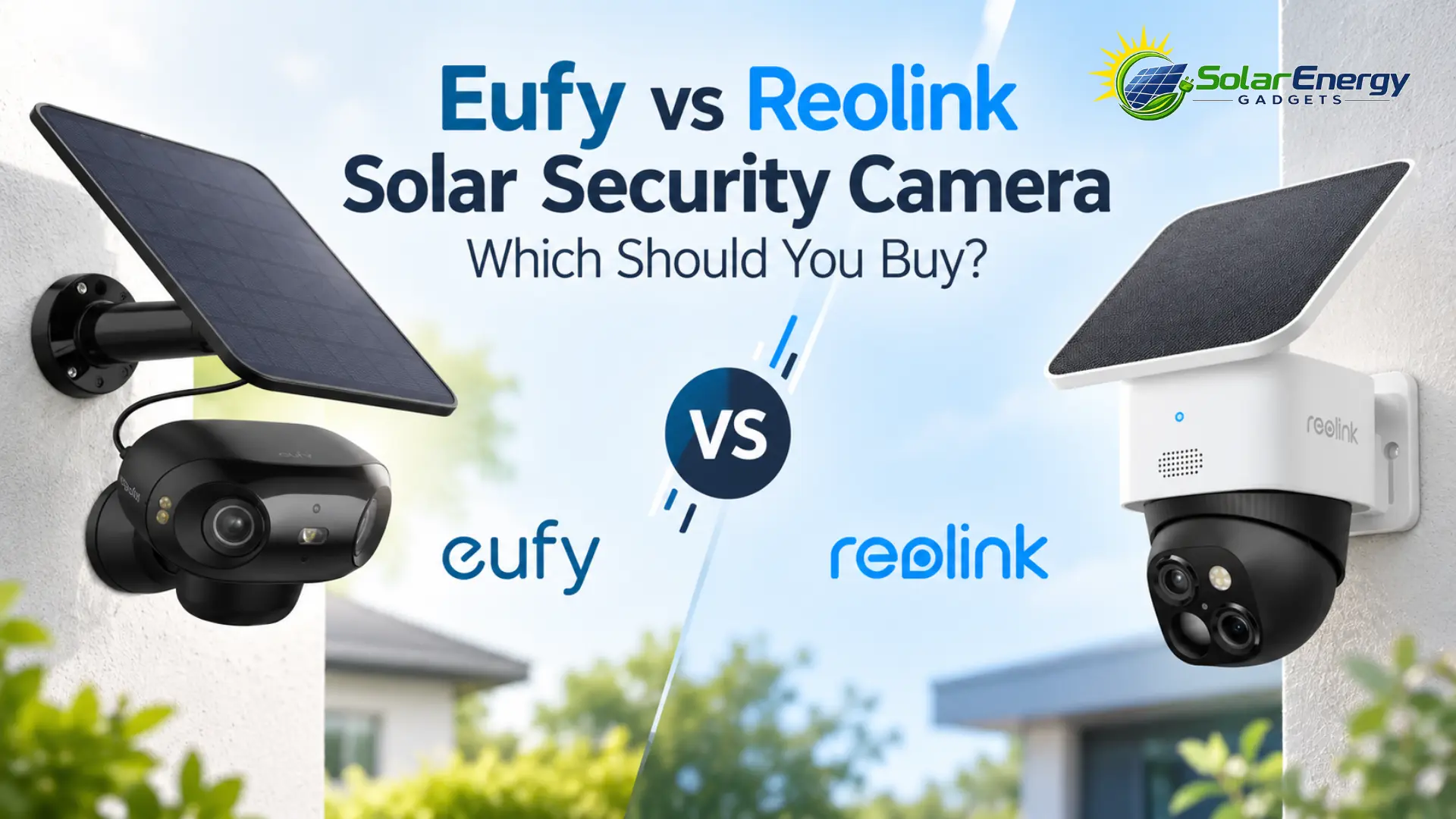
There are probably one or two spots on your property that seem like an ideal place for evil to lurk. You know a security camera will improve the situation. But you never installed one since there is no power connection. And setting up a new line, even if possible, will cost way more than your camera budget. Then you find out there is a perfect solution for this exact problem – a wireless solar outdoor camera.
As you enter the market, maybe through online reviews and top five lists or chatting with a few friends, two names emerge everywhere. Eufy and Reolink solar security cameras. It’s not hard to figure out that your best choice will be between these two. Both brands offer zero-hassle, no-subscription solar cameras that are affordable and easy to set up. However, both get so much praise that an Eufy vs Reolink Solar Security Camera decision can be a hard one to make.
Although both are good cameras, which one wins for your home depends on what matters most about the camera to you. For some buyers, the first requirement might be solar charging performance, while many are concerned about whether the camera will survive their too-hot or extremely chilly outdoors. The following discussion can help you make an informed decision and make a purchase you don’t later regret.
Eufy vs Reolink Quick Comparison: Top 5 Solar Security Cameras Side-by-Side
Before we get into a detailed and specific comparison, here’s a broader eufy vs reolink comparison. This will help buyers who aren’t looking for anything particular in a solar security camera and just want to pick the one with better specs and within their price range.
So here are five cameras from the two brands. The prices here are realistic estimates and vary according to retailers and market demand. We have put the most reasonable figures, so if some retailer quotes a higher price, it wouldn’t be too shocking.
| Eufy SoloCam S340 | Eufy eufyCam S4 | Reolink Argus PT Ultra | Reolink Argus 4 Pro | Reolink Go PT Ultra | |
| Approx. price with panel | 140$-200$ | ~300$-350$ | ~$160 | ~$150-$215 | $190-$230 |
| Video | 3K wide + 2K telephoto, 8× hybrid zoom | 4K fixed bullet + dual 2K PTZ | 4K, one lens | 5120×1440 stitched panorama | 4K, one lens |
| View | 135° field of view; pans 360°, tilts 70° | 130° fixed; PTZ rotates 360° | 90° lens; pans 355°(360), tilts 140°, auto-tracks | 180° × 50°, fixed | 90° lens; pans 355°, tilts 140° |
| Solar panel | 2.2W, removable | 5.5W, detachable | 3W | 6W | 6W |
| Connection | Wi-Fi, 2.4 GHz only | Wi-Fi or HomeBase S380 | Dual-band Wi-Fi 6 | Dual-band Wi-Fi 6 | 4G LTE (no Wi-Fi) |
| Weather rating (IP) | IP67 | IP65 | IP64 | IP66 | IP64 |
| Local storage | 8GB built-in, not upgradeable | 32GB + microSD up to 256GB | microSD (listings say 128–512GB) | microSD up to 512GB | microSD up to 128GB |
| Warranty (US) | 1 year | Confirm at checkout | 2 years | 2 years | 2 years |
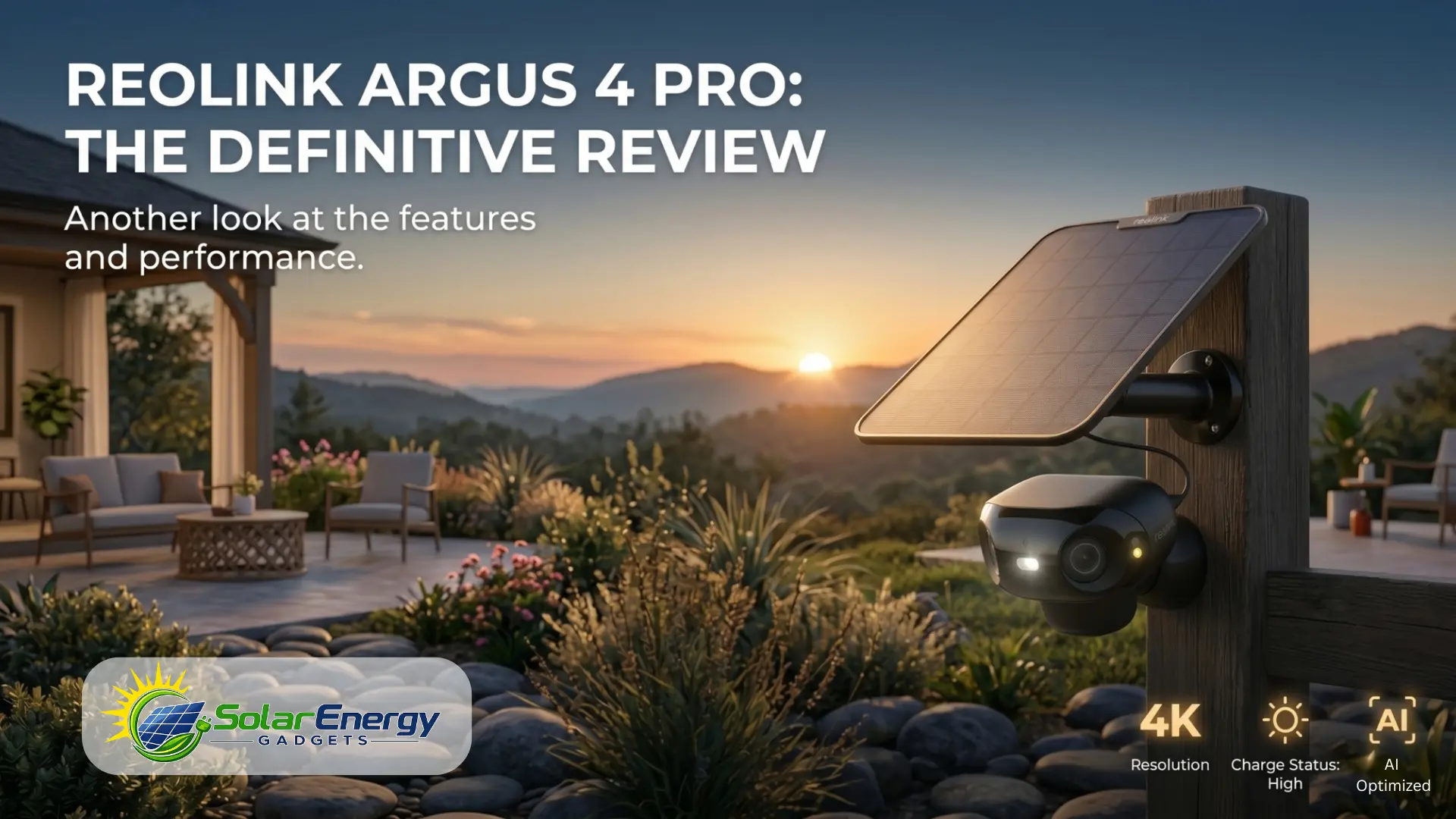
This table doesn’t make it clear right away that the Argus 4 Pro isn’t a one-wide-lens camera. Instead, there are two lenses working together. This is how the Reolink Argus 4 Pro can see 180 degrees without any moving parts. Meanwhile, the Eufy S340 camera doesn’t have a wide view, but its head can turn and zoom. The more expensive Eufy S4 offers true 360 degrees and features a radar sensor.
Eufy SoloCam S340 vs Reolink Argus 4 Pro
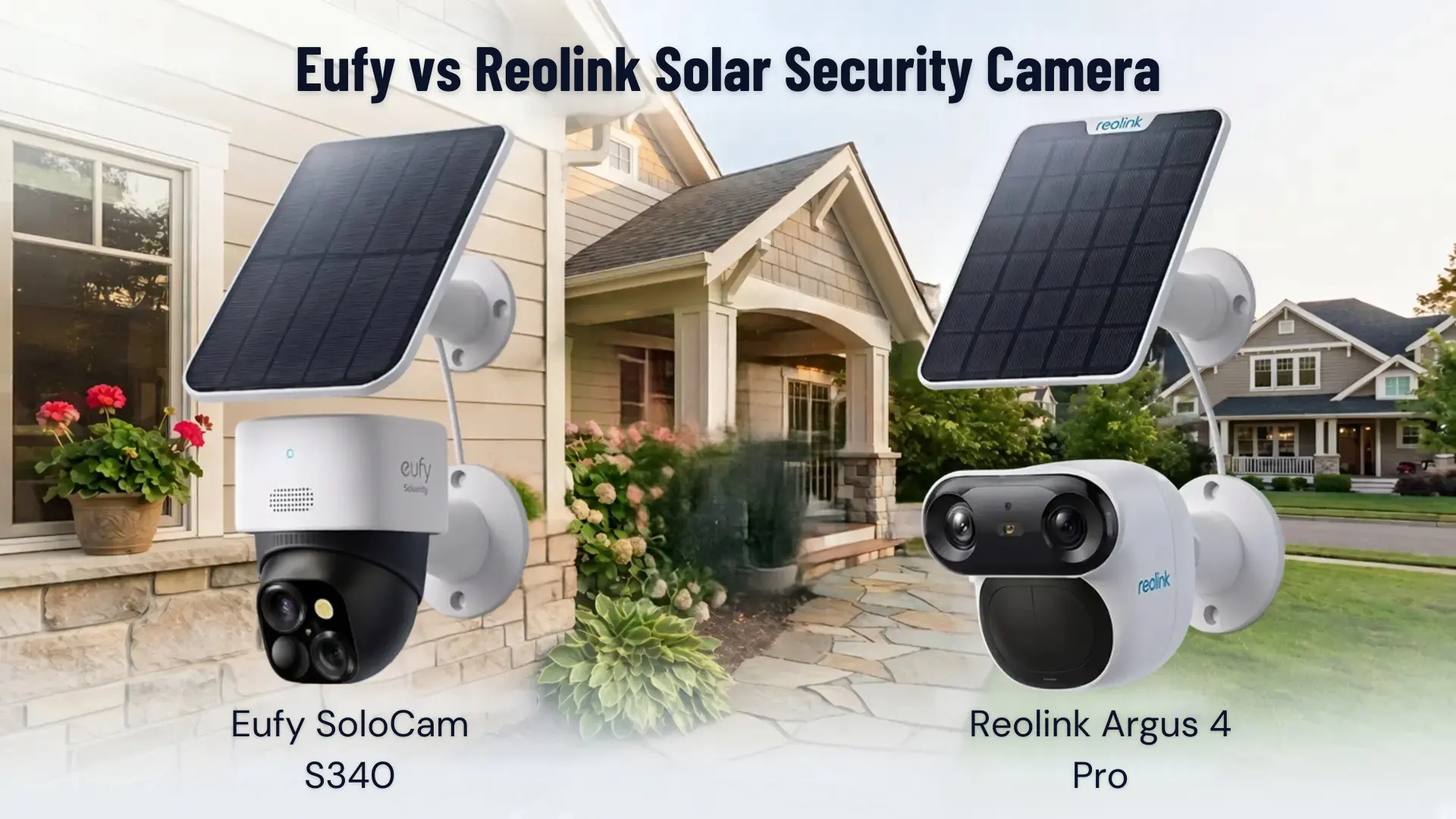
For many buyers, the ultimate choice might come between these two since they are in the same affordable price range. Not ridiculously expensive, while also not so cheap that you might doubt the quality. The choice comes down to what you need the camera to do. If you want a full and fixed wide view of the yard at once, then the Reolink Argus 4 Pro is the better choice for its 180-degree view. Meanwhile, if you want to zoom in and follow a threat, then the Eufy S340 is what you need.
Also, the Eufy 340’s 2.4 GHz-only Wi-Fi is fine at a far-off shed, since 2.4 GHz travels further. However, the Argus’s dual-band Wi-Fi 6 is more flexible.
Eufy SoloCam S340 vs Reolink Solar Pan-Tilt: The Argus PT Ultra
The Reolink Argus 4 Pro’s stitched 180° panorama might not impress those who want their camera to move. In that case, you will decide which is better between the Reolink Argus PT Ultra and Eufy SoloCam S340. Well, Reolink here seems to be the better choice since it offers a sharper 4K image compared to Eufy S340’s 3K.
However, remember what you are missing when you pick this one instead of the Argus 4 Pro. The Reolink Argus PT Ultra’s view width is half of the Argus 4 Pro’s and also comes with solar panels that are half the capacity.
The Argus 4 Pro is fixed, so the fairer rival for the pan-tilt S340 is Reolink’s Argus PT Ultra. You lose the S340’s second zoom lens, but you get a sharper 4K image, dual-band Wi-Fi, and a second year of warranty. Its panel is half the size of the Argus 4 Pro’s, so give it a sunnier spot.
Takeaway:
- For a wide fixed view, choose the Reolink Argus 4 Pro
- For pan-tilt, it’s the S340’s zoom and simpler app against the PT Ultra’s 4K picture, Wi-Fi flexibility, and longer warranty.
Eufy vs Reolink Solar Camera Battery Life: How Much Sun Does Each Need?
First, you should accept that the convenience of running a security camera without depending on the main power line has a price. And that is, you always have to worry about how much charge it has, as you do for your cell phone. That is usually not a concern for a camera or any gadget that runs plugged in.
Both brands measure the battery on the basis of roughly five minutes of recording a day. So, their “battery alone” numbers are comparable. The sunlight numbers are where it gets interesting.
| Panel | Battery alone | Sun needed per day (maker claim) | |
| Eufy SoloCam S340 | 2.2W | 3 months | Not stated; panel collects 800–1,200 mAh a day vs 100–200 mAh used |
| Eufy eufyCam S4 | 5.5W | Not published | About 1 hour of direct sun |
| Reolink Argus PT Ultra | 3W | Not published | About 20 minutes |
| Reolink Argus 4 Pro | 6W | About 2 months | About 10 minutes |
| Reolink Go PT Ultra | 6W | Up to 2 months | About 10 minutes |
Well, the S340’s battery outlasts the Argus 4 Pro’s. However, Reolink has bigger panels. They are rated to top up in far less sun. That makes Reolink better suited for a shady spot, while the S340 suits a sunny site with few alerts. These figures are best-case and not guarantees.
From our reviewer team’s own experience with the product and what users say both online and offline, we can get a consistent real-world picture. Most users get about a month per charge from the Argus 4 Pro without solar, roughly half of what the manufacturer claims. Also, both brands’ panels keep cameras topped up in sunny months, but bleak winters are a weak spot for both.
Takeaway:
- In a shaded or north-facing spot, go with Reolink as it offers the bigger panel
- At a sunny, quiet site, the S340’s longer battery makes it the better pick
If you want a full review of the Eufy SoloCam S340, watch our Eufy SoloCam S340 Solar Security Camera Review
Solar Security Camera for Harsh Weather: Reolink vs Eufy
Like all solar gadgets, these security cameras stop solar charging in freezing weather. Eufy says its cameras may not charge once their internal temperature hits 0°C (32°F), and Reolink’s panels have the same floor. Charging restarts by itself when things warm up.
| Camera | Operating range | Charging |
| Eufy SoloCam S340 | -20°C to 50°C (-4°F to 122°F) | Pauses at or below 0°C (32°F) |
| Eufy eufyCam S4 | -20°C to 55°C (-4°F to 131°F) | Same; battery is swappable |
| Reolink Argus 4 Pro, PT Ultra, Go PT Ultra | -10°C to 55°C (14°F to 131°F) | Only between 0°C and 45°C (32–113°F) |
Most owners in cold states will agree that both brands require a manual recharge once or twice in January and February. The S4 makes that easiest, since you can swap in a charged battery indoors. A major user tip here is clearing snow and tilting the panel steeper in winter. Eufy’s motion sensors get less sensitive in the cold, so raise the sensitivity.
Excessive heat also affects performance. Reolink’s panels may stop charging above 113°F, and the S340 has the lowest published heat limit. For rain and dust, the Argus 4 Pro has the best confirmed IP rating (higher means better sealing). So, Reolink seems like the obvious choice if heat and moisture are your main concern.
Takeaway:
- No solar camera here escapes the freezing-point problem
- For harsh winters, the S4’s swappable battery is the practical pick
- For hot or wet sites, the Argus 4 Pro’s higher rating and heat limit make it the safer one.
Eufy Vs. Reolink Night Vision: Which Solar Security Camera Sees Better in the Dark?
The Argus 4 Pro skips infrared for ColorX, a larger sensor that records full-color night footage, with spotlights as backup. The S340’s second lens is a telephoto that can pull a face out of a dark yard (about 40 ft allegedly), and the S4’s tracking zoom camera reaches up to 164 ft. The Reolink pan-tilt and 4G models use a narrower lens with infrared and a color spotlight.
Reolink fans and owners seem rightfully impressed by the Argus 4 Pro’s color night vision. But they also note that bright lights can wash out part of the frame, and there’s a blind spot directly below it. The S340 earns praise for image quality and tracking, though its dual-lens view looks softer, and its AI can be hit-and-miss in heavy rain.
Detection is the real day-to-day difference. The S340 recognises people and vehicles on the camera itself, so alerts don’t need a subscription. The S4 supposedly adds radar to cut false alarms. Reolink’s person and animal detection is remarkable, but expect to tune sensitivity until leaves and insects stop triggering it.
Takeaway:
- Nothing beats the Argus 4 Pro when it comes to watching a whole yard at once. You just have to set it up strategically.
- The S4 is best at identifying a person, and the S340 is the cheaper way to get zoom.
Storage and Three-Year Cost: Reolink microSD vs Eufy HomeBase Local Storage
Every camera here is a local storage solar camera. It records to onboard memory or a card; therefore, there is no required fee to store your security footage. The difference is how much room these brands offer you to grow. The S340’s 8GB can’t be upgraded, so more space means adding a HomeBase S380 hub (also sold as HomeBase 3).
The S4 and Reolink cameras simply take a cheaper microSD card. One catch for all: battery cameras record motion events, not 24/7. Eufy says even the S340 with a HomeBase can’t, and the S4 only can when plugged in.
| 3-year estimate | Eufy SoloCam S340 | Reolink Argus PT Ultra | Reolink Argus 4 Pro |
| Camera + panel | ~$140-$200 | ~$160 | ~$150-$215 |
| Memory card | $0 (built-in) | ~$20-$30 | ~$20-$30 if not included |
| Total, no extras | ~$140-$200 | ~$180-$190 | ~$170-$245 |
| With mounts, cables, spares | ~$190-$280 | ~$230-$270 | ~$220-$325 |
| Optional cloud, 3 years | ~$120 | ~$215-$250 where offered | ~$215-$250 where offered |
Treat these totals as illustrative, since sales swing prices and the cameras aren’t identical (the Argus 4 Pro is fixed while the other two pan).
Reolink Solar Camera Hidden Costs and Subscriptions
Subscriptions are optional on both sides and mostly buy cloud backup. Eufy’s cloud starts at $3.99 a month or $39.99 a year. If you find sources quoting $2.99, then those are out of date.
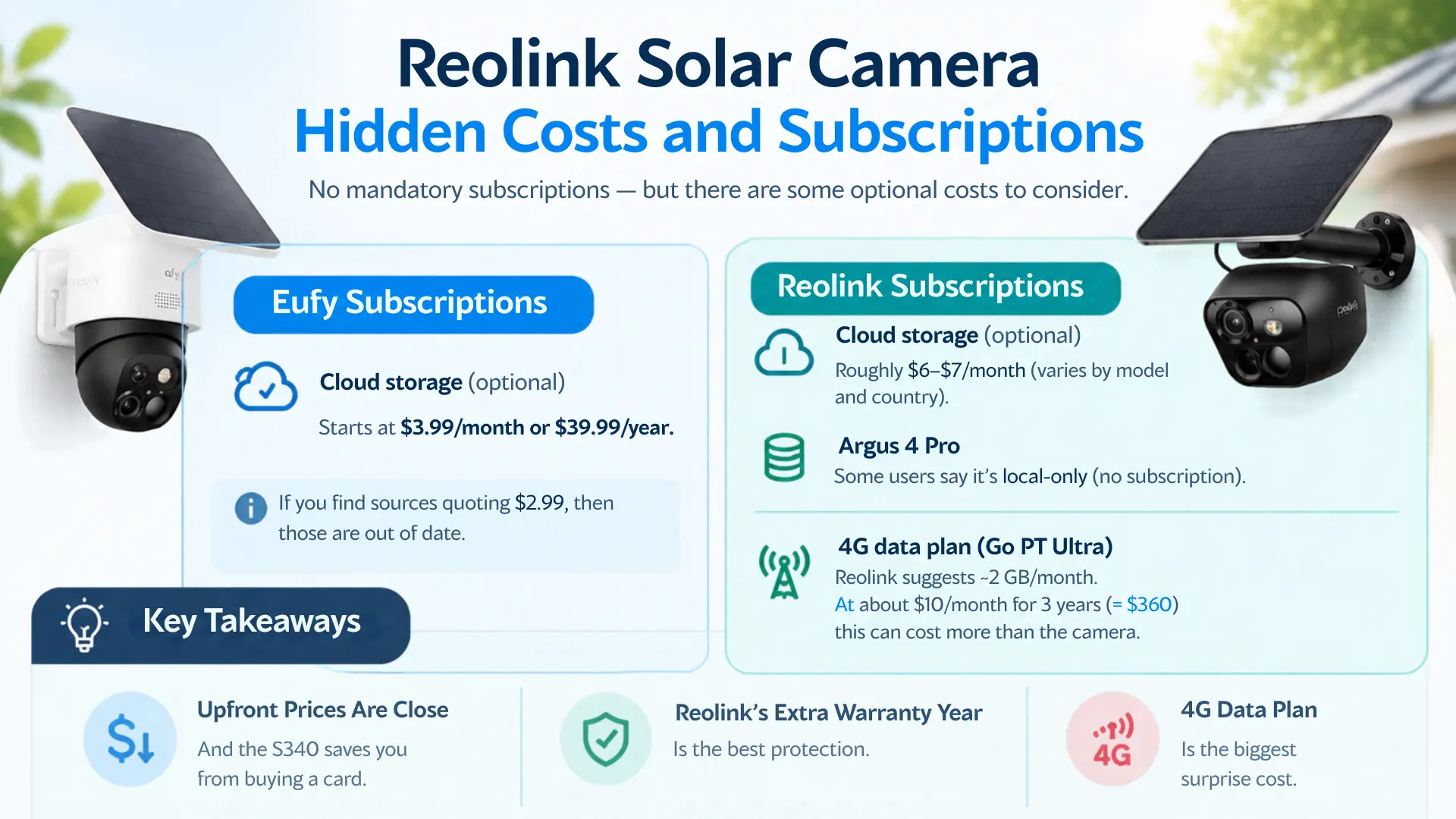
Reolink runs roughly 6$-7$ a month where offered, depending on model and country, and some users online say that the Argus 4 Pro is local-only. The higher hidden cost is the Go PT Ultra’s 4G data. Reolink suggests about 2 GB a month, which at roughly $10 a month and three years of data (about $360) can actually cost more than the camera.
Takeaway-
- Upfront prices are close, and the S340 saves you from buying a card
- Reolink’s extra warranty year is the best protection, and the 4G data plan is the biggest surprise cost.
If you want a detailed review of the Reolink Argus 4 Pro, visit Reolink Argus 4 Pro Solar Security Camera Review
Privacy and Security Record: What Happened With Each Brand
Neither brand has a spotless record. Eufy’s problem was honesty. In 2022, a researcher showed cameras marketed as local-only uploaded thumbnails to the cloud, and Anker later admitted they weren’t natively end-to-end encrypted. Anker says that’s fixed, though eufy still says thumbnail notifications need images briefly stored in the cloud.
Reolink’s problems were vulnerabilities. A 2021 advisory from CISA, the US cybersecurity agency, covered its P2P feature, which Reolink says it patched. In December 2024, CISA also added two older Reolink flaws to its actively exploited list. Those hit older models; we found nothing naming the cameras in this guide.
Takeaway: Keep firmware updated, use a unique password, and switch off thumbnail and cloud features if you want footage to stay strictly local.
Eufy App vs Reolink App: Security Camera User Experience
Reviewers consistently call Eufy’s app the easier one. Some users get their S340 paired in about ten minutes. Reolink’s app has more settings, and its customer service earns repeated praise, but owners find browsing microSD footage clunky. Both brands collect connection-drop complaints.
Smart-home support is where they split. The Argus 4 Pro and PT Ultra work with Google Home and Alexa. The S340 works with Alexa and Google. Eufy has listed Apple HomeKit for the S4 in some markets (check your specific US bundle and current product page).
Reolink has no HomeKit but is friendlier to tinkerers. You can add a Reolink Home Hub, and you can use Home Assistant and RTSP video feeds. The catch is that the Go PT Ultra can’t use a Home Hub at all, because the Hub doesn’t support 4G cameras.
Setup is quick on all five. Check Wi-Fi at the exact mounting spot before drilling, and bring your own masonry anchors for the Argus 4 Pro, since owners call the included ones flimsy.
Takeaway:
- Pick Eufy if you want the app to just work
- Pick Reolink if you want more settings or room to grow into a Home Hub or NVR.
Eufy Vs. Reolink: Best Solar Camera by Situation
- Best Solar Camera for Off-Grid Property: If there’s no Wi-Fi, Reolink is the only option here. The Go PT Ultra runs on 4G with a SIM, so it works at a remote shed or gate (check coverage on site). Its narrow lens relies on panning.
- Farm Security Camera: This comes down to a Reolink 4G LTE solar camera vs. Eufy Wi-Fi solar camera question. Does the barn or gate have Wi-Fi? If yes, the S4’s tracking zoom is the best at identifying someone crossing a yard. If no, the Go PT Ultra is your camera.
- Solar Camera for Driveway With No Wiring: For a wide driveway, the Argus 4 Pro’s 180° view is hard to beat. If you need to read details or identify a person, choose the S340 or S4.
- Best Wireless Solar Camera for Rental Home Use: Solar avoids running wires, but mounting may still need drilling, so check your lease. The S340’s removable panel and the Argus PT Ultra’s low price are the easiest to justify.
Verdict: Eufy Solar vs Reolink, Which Should You Buy?
For many US homeowners, Reolink looks like the better choice. It offers a wider view, a longer warranty, and 6W panels rated to need very little sun. Eufy isn’t bad either if you want easier setup and motorised zoom. Whichever you pick, treat winter charging as a limit of the technology, not a flaw of one brand.
Choose Eufy if you want pan-tilt and zoom (S340) or automatic close-ups (S4), and have strong 2.4 GHz Wi-Fi where it will be mounted. Choose Reolink if you want a wide view for the money (Argus 4 Pro), pan-tilt with dual-band Wi-Fi (PT Ultra), a two-year warranty, or 4G for a no-Wi-Fi site (Go PT Ultra). Confirm prices and warranty on the current US product page before buying.
FAQs on Eufy and Reolink Solar cameras
Do Eufy solar cameras require a monthly fee?
No. The S340 records locally for free, and cloud storage is optional. The same goes for Reolink. You only pay if you choose optional cloud backup or advanced features; basic local recording and alerts work without any subscription.
Are Reolink solar cameras compatible with Google Home and Alexa?
The Argus 4 Pro and PT Ultra list both. The Go PT Ultra lists Google Assistant, so check other models on the product page. Compatibility can vary by firmware and region, so confirm the current listing before relying on voice control.
Is there a continuous recording solar security camera, Reolink vs Eufy?
Not on battery. Eufy says the S340 can’t record 24/7 even with a HomeBase, and the S4 only can on direct power. All five models in this guide are motion-triggered when running on battery or solar, which is standard for this category.
Eufy HomeBase 3 compatibility with solar cameras: which models work?
HomeBase 3 is the same hub as the HomeBase S380. The S340 works with it for extra storage and AI features. The S4 works with it too but doesn’t need it. Pairing with the hub also unlocks features such as cross-camera tracking and larger expandable storage.
What is the best ecosystem for smart home security, Eufy or Reolink?
Eufy is simpler; HomeKit support for the S4 is not clearly confirmed on current US product pages, so check the specific listing. Reolink is more open, with Home Assistant and RTSP through its Home Hub, but has no HomeKit. Choose Eufy if you want a polished app and minimal setup; choose Reolink if you prefer deeper local integrations and tinkering options.
Solar Energy Gadgets is a premier global hub for original, expert-led solar product reviews. Our dedicated team of specialists rigorously tests the latest renewable energy technology from around the world to ensure our readers receive unbiased and practical advice. Whether you are outfitting a suburban home or looking for the best off-grid gear, we provide the insights you need to harness the power of the sun with confidence.