Solar security cameras have been one of the most popular home upgrades in the US in 2026. This is because more American households are becoming smart homes, and many owners don’t want to deal with the complexity of outdoor wiring access. Plus, high monthly subscriptions are a major issue. As a result, a solar outdoor security camera is more of a default appliance rather than a luxury these days.
However, it’s not easy to pick the best camera within a moderate budget if you are not particularly tech- and gadget-savvy.
Brands and retailers like to throw around words like ‘solar’ and ‘AI’ too much since that’s what sells in 2026. Making it through all the aggressive marketing language can be difficult for the average homeowner. This makes finding an under $250 solar security camera that actually survives the outdoors for years more complicated than it needs to be.
So, here we are to help. Our team has picked up the best solar security cameras under $250 based on their own experience with the products. We have also carefully analyzed the consensus regarding these products on solar gadget forums and closed social groups. The result is a truly unbiased list that can be an excellent guide for buyers.
What Makes a Good Solar Security Camera?
Anyone can bolt a solar panel to a surveillance camera and call it a solar-powered outdoor security camera. However, a truly competent camera follows a more meticulous design.
For instance, a good solar security camera must have a panel sized to its power draw. A tiny 1-2W panel on a power-hungry 4K sensor means hand-charging for half the year, especially in winter or shaded yards. The best models pair efficient hardware with a panel large enough to stay topped off on 2-3 hours of average daily sun.
Another important factor is what happens when the camera detects motion. A solar security camera with motion detection that’s unable to differentiate between a person and a passing car can be extremely annoying. It will flood your phone with junk alerts until you stop trusting it.
So, AI detection, adjustable motion zones, and reliable notifications matter more day-to-day than headline resolution.
Here’s a quick checklist of what a good solar security camera must have:
- Solar panel wattage matched to camera draw (4W+ for 2K/4K cameras, especially in northern climates)
- Local storage option – a solar security camera with local storage (microSD or built-in eMMC). This means you will not be locked into a monthly fee.
- AI-based person/vehicle detection, not just generic motion sensing
- Weatherproof rating of IP65 or better
- Color night vision or strong infrared, so night footage is actually usable
- Two-way audio, useful for deliveries and deterrence
- Good brand recognition and presence in the USA to ensure proper after-sales support
Top 7 Solar Security Cameras in USA 2026
There are actually two lists here. We picked four cameras getting the most buzz on tech media right now. At the same time, we included three lesser-known but genuinely well-reviewed options worth a look if you want something different from the crowd.
The common factor between all these cameras is that their prices are below $250. Also, all these camera with roughly the industry-standard warranty of 1 year. However, Reolink comes with an extended 2- to 2.5-year warranty.
If you prefer to watch videos, then watch Top 7 Solar Security Cameras in the USA 2026 | Wireless & No Monthly Fee
Watch till the end for the conclusion on whether and which one will suit you best.
1. Eufy SoloCam S340 Solar Security Camera — Best Subscription-Free 360° Pan-and-Tilt Camera
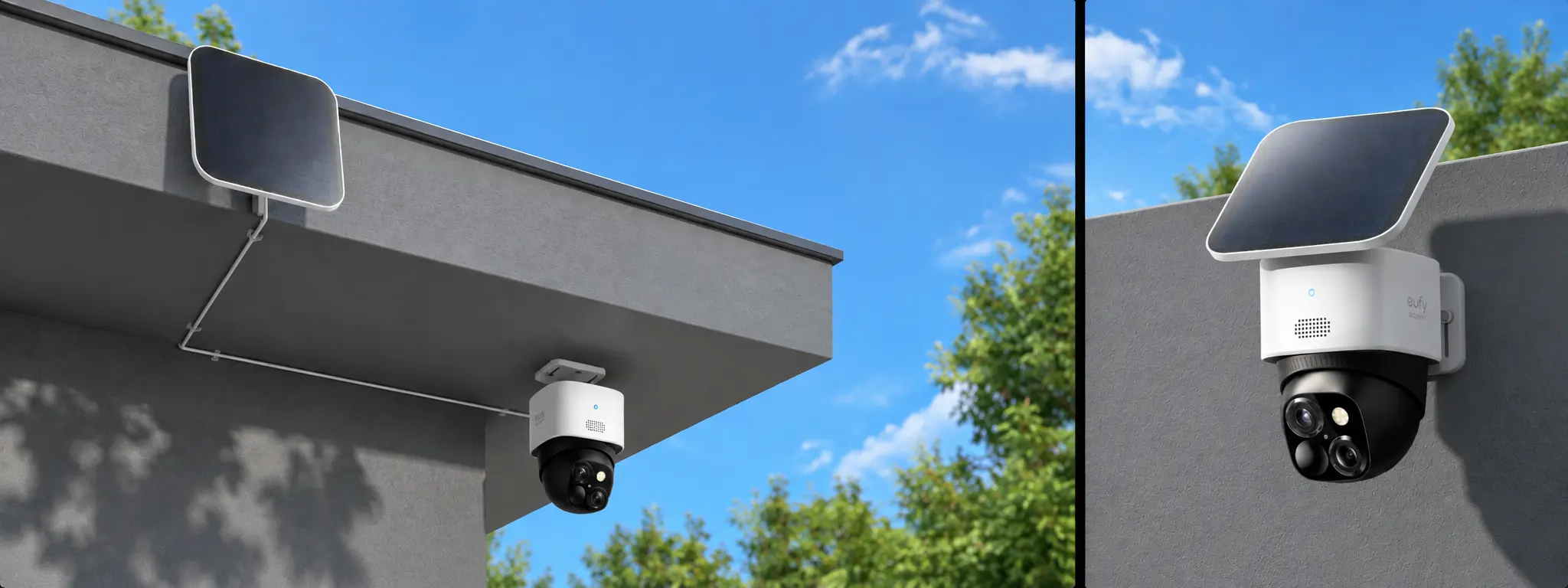
Eufy SoloCam S340 and Reolink are the two most well-known brands on this list. Most buyers make a Eufy vs Reolink solar security camera comparison to decide which one to buy.
Eufy built its US reputation on one pitch: strong hardware with zero mandatory fees. It’s one of the most-recommended wireless solar security camera picks on Amazon.
What gets the most praise is the Eufy SoloCam S340’s dual-lens setup. It’s a wide shot plus zoom lens paired with full 360° coverage via pan-and-tilt. This lets the camera cover an entire driveway or backyard without dead zones. For more detailed analysis, read the full review of the Eufy SoloCam S340.
Quick specs
- Price: roughly $150–$200 (sales bring it closer to $120–$160)
- Dual-lens 3K wide-angle + 2K telephoto, 8× hybrid zoom
- 360° pan / 70° tilt, 135° field of view
- Built-in 2.2W solar panel, ~3-month standalone battery
- 8GB built-in local storage, solar security camera with no subscription
- AI person/vehicle detection with color night vision
- IP67 weatherproof rating
- Setup difficulty: Easy; screw-mount bracket, no siding drilling, ~15-20 minutes
Pros
- Strong subscription-free value
- Dual-lens design covers wide and zoomed shots at once
- Genuinely wire-free 360° coverage
- Reliable AI detection cuts false alerts
Cons
Some users report the camera drops offline when the WiFi signal falls below roughly -65 dBm at the install spot. Many experience short Battery life if their motion sensitivity is set too high near a busy street. This means you have to give it some time to properly set up the zone configuration.
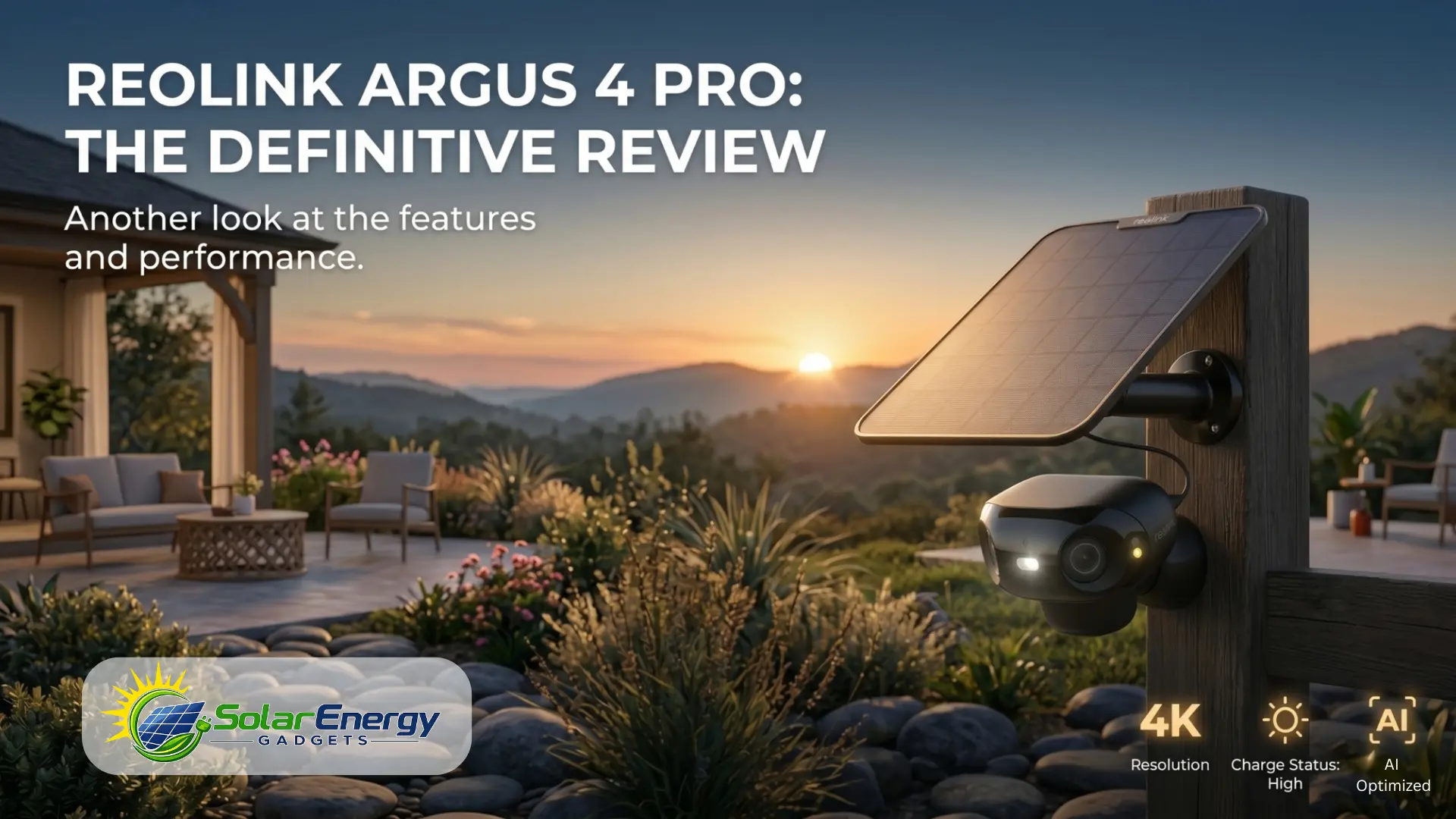
2. Reolink Argus 4 Pro Solar Security Camera — Best 4K Ultra-Wide 180° Panoramic Camera
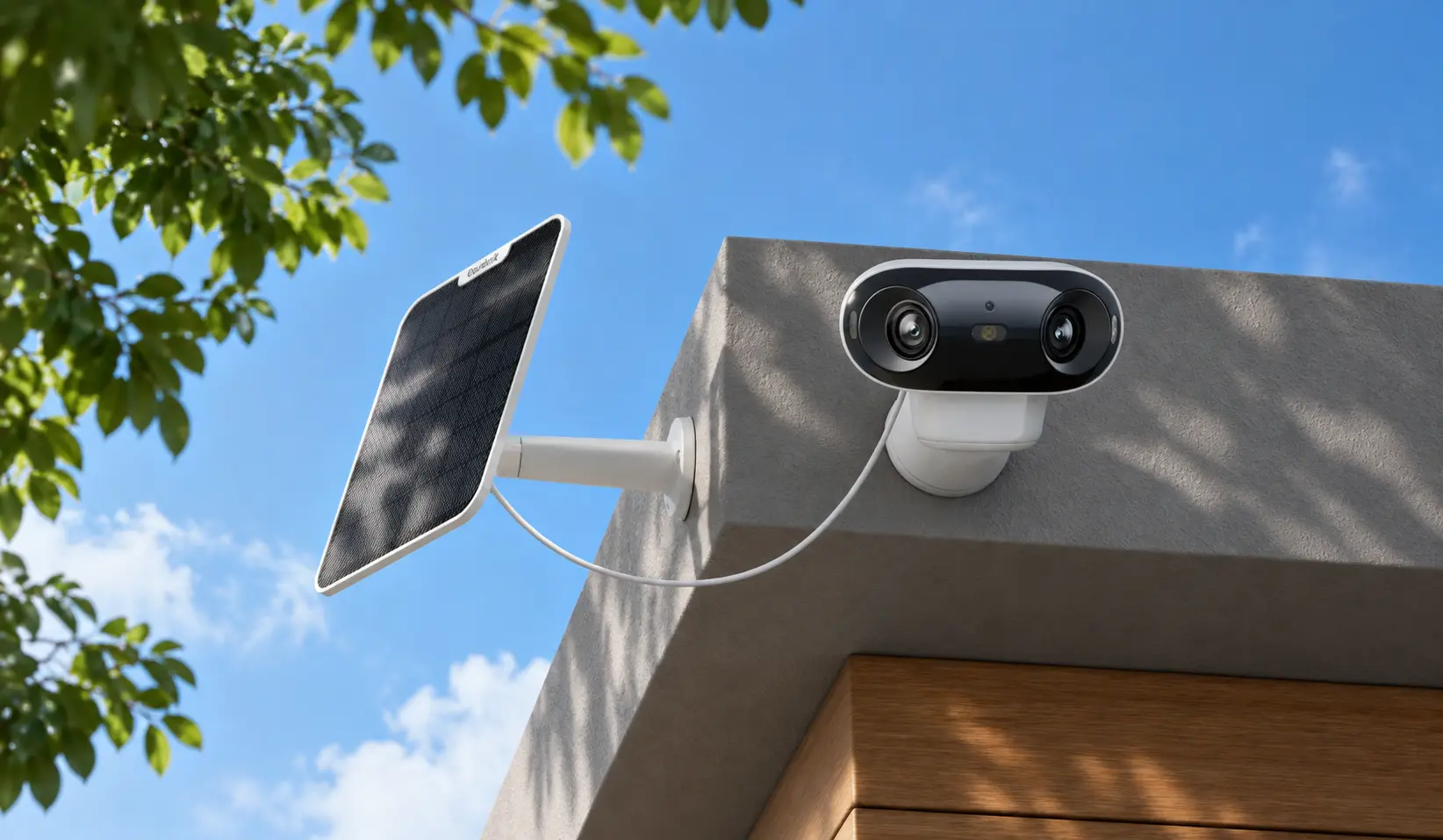
Reolink Argus 4 Pro Solar gained its US following with its high-resolution footage, local storage, and no forced fee. It becomes an obvious choice for buyers comparing the best 4K solar security camera against subscription-based brands. The Reolink Argus 4 Pro reviews consistently state it’s the sharpest wire-free camera in its price class, largely thanks to its dual-lens 180° stitched image.
Quick specs
- Price: roughly $190–$220 (bundle includes 6W solar panel)
- 4K 8MP dual-lens stitched image, 180° panoramic field of view
- ColorX night vision (full color without relying on spotlight; built-in spotlights available as backup)
- Dual-band Wi-Fi 6
- microSD storage up to 512GB, no subscription
- AI person/vehicle/animal detection
- IP66 weatherproof
- Setup difficulty: Easy-Moderate; bracket mount plus separate solar panel placement, ~20-30 minutes
Pros
- Sharpest daytime image quality on this list
- True 180° coverage from one camera
- Local storage, no subscription requirement
- Larger 6W solar panel than most competitors include
Cons
Our team tested it in colder climates and found the bundled panel struggling in extended cloudy winters. Sometimes the battery dropped from 100% to 30-40% over a cold, cloudy week.
Some users also report a 4-8 second lag on push notifications. This lag is fine for general monitoring, but it becomes an issue for instant package-theft alerts.
3. Ring Stick Up Cam Pro Solar Security Camera — Best Smart Home Integration with Radar Motion Detection
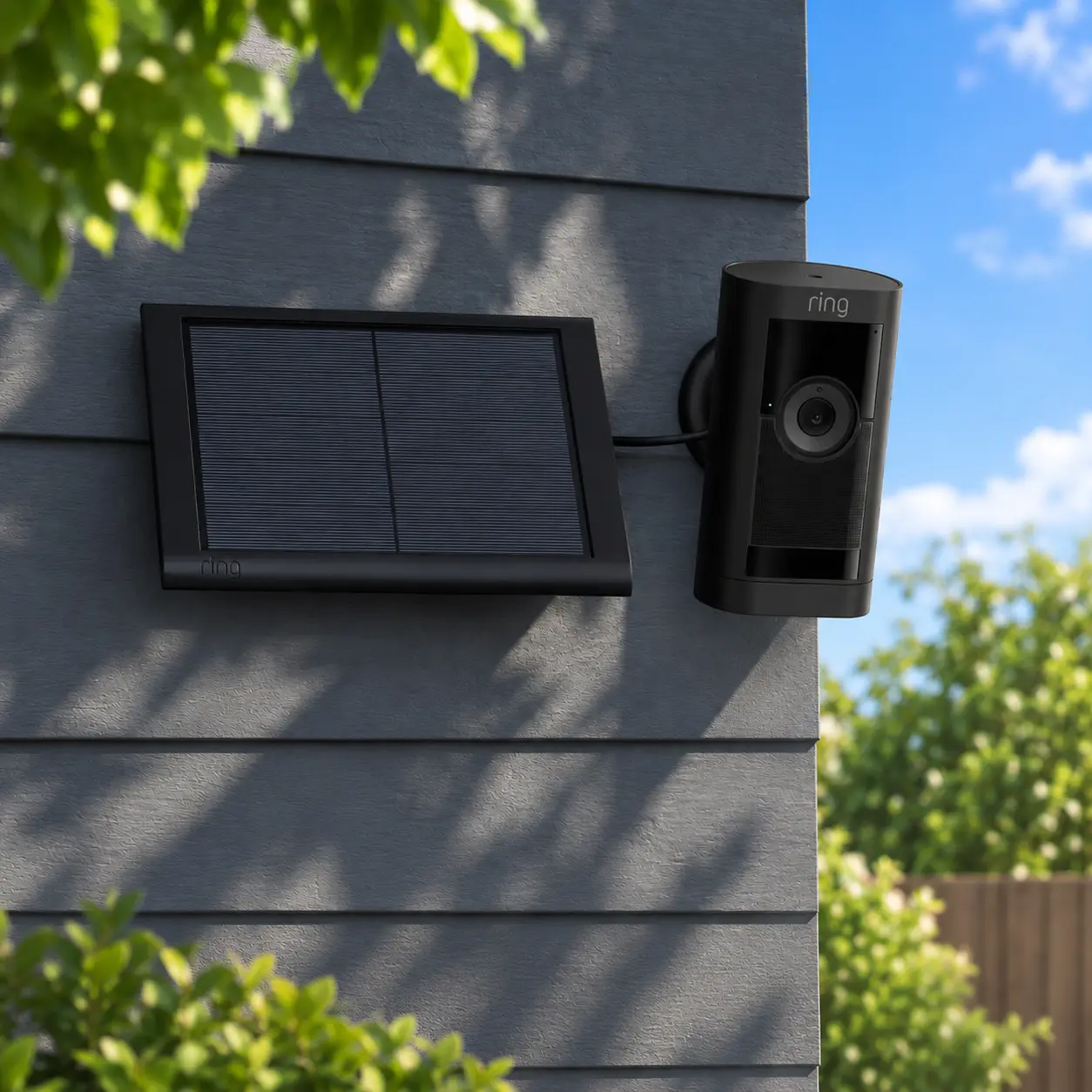
Ring Stick Up Cam Pro Solar is one of the most recognized US home security camera names. What separates the Stick Up Cam Pro Solar from Ring’s cheaper models is radar-assisted 3D Motion Detection. This feature can track a person’s path rather than just flagging “something moved.”
Quick specs
- Price: roughly $210–$230 (bundle includes 4W solar panel)
- 1080p HDR video with color night vision
- Radar-powered 3D Motion Detection with Bird’s Eye Zones
- Two-way talk with Audio+
- Dual-band Wi-Fi
- Weather-resistant housing rated for rain and snow
- Deep Alexa and Ring Home ecosystem integration
- Setup difficulty: Easy; wall bracket plus separate solar panel, ~20 minutes; beginner-friendly app
Pros
- Best-in-class Alexa and Ring ecosystem integration
- Radar motion tracking cuts false alerts
- Strong two-way audio quality
- Reliable brand support and firmware updates
- Improved 2026 encryption that limits what video data Ring can access or share
Cons
The hardware records at 1080p. From this angle, it falls behind the 4K/3K sensors on similarly priced rivals.
To access its most useful features, which are the 180-day cloud history, person/package alerts, and full Bird’s Eye View playback, you will need a paid Ring Protect subscription (Solo roughly $4.99/month or $49.99/year; Multi $9.99/month or $99.99/year).
Over 3 years, a Solo plan adds about $150 on top of the camera price. This works against the “no monthly fee” appeal that draws people to solar cameras.
4. TP-Link Tapo MagCam 4K Solar Security Camera (C460 Kit) — Best High-Resolution AI Sentry with Magnetic Mounting
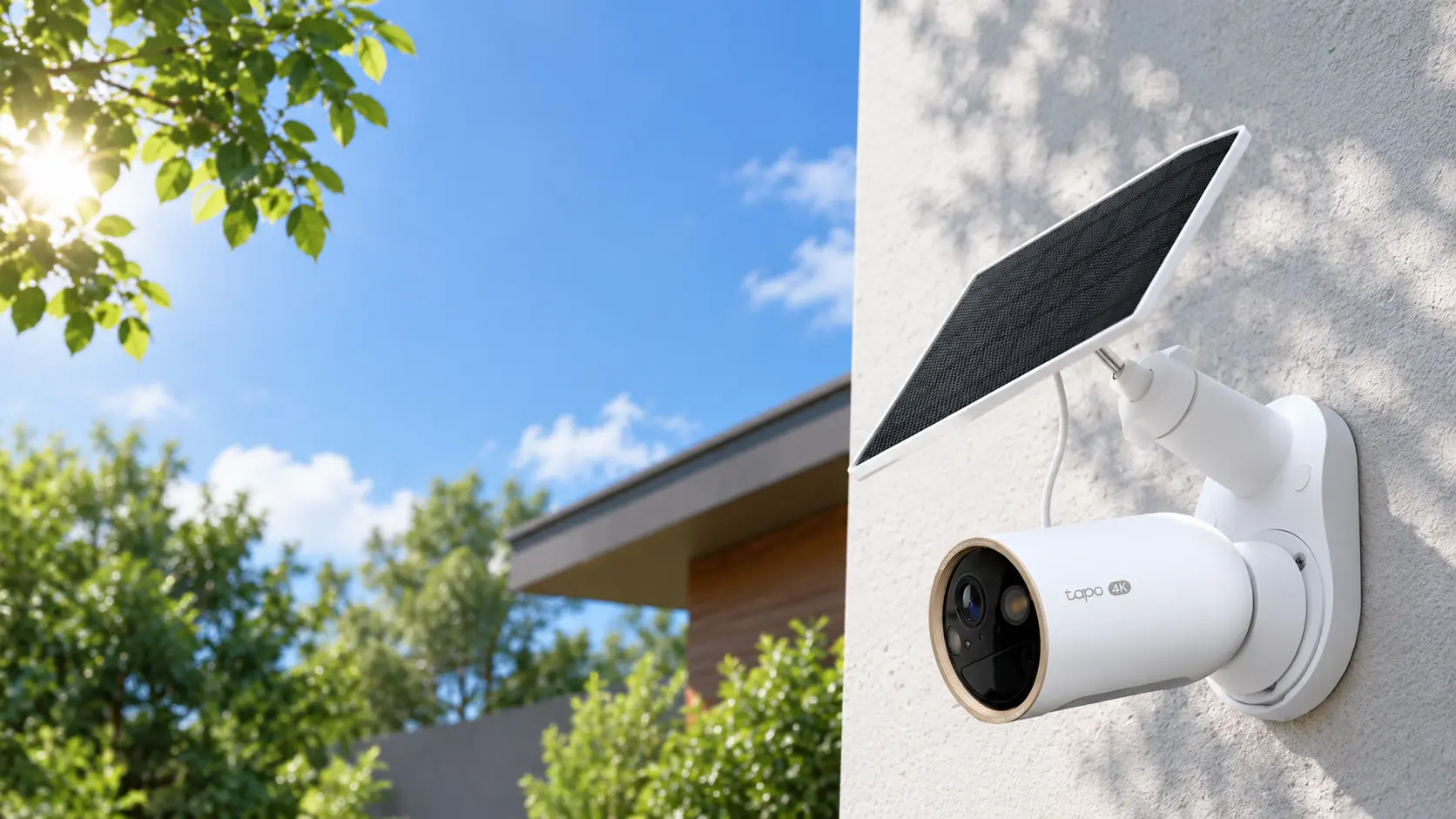
TP-Link is one of the most established US networking hardware companies. The brand’s Tapo smart-home line leans heavily into value for money. The MagCam 4K Solar line is part of TP-Link’s 2025-26 4K refresh.
This model stands out mainly for its magnetic base. It provides a simple way to angle, remove, or relocate the camera without re-drilling. None of the pan-tilt models here match that convenience.
Quick specs
- Price: roughly $150–$170 per single unit (multi-packs lower the per-camera cost)
- 4K 8MP resolution, F1.65 lens
- Starlight color night vision with integrated spotlights
- 10,000mAh battery, up to 200 days per charge
- Dual-band Wi-Fi (2.4GHz and 5GHz)
- Magnetic base, fully wire-free mounting
- IP66 (camera) / IP65 (solar panel) weatherproof; subscription-free local storage or optional cloud
- Setup difficulty: Easy; magnetic base attaches to included metal plate, ~15 minutes
Pros
- Excellent 4K image detail for the price
- Very large battery buffers against low-sun stretches
- Magnetic mount is the easiest install/removal on this list
- Flexible local-or-cloud storage, no forced subscription
Cons
The magnetic base, while convenient, can also be pulled off by hand more easily than a screwed-down housing. If you have mounted the camera somewhere easily reachable, then this can be a major security concern.
5. Blink Outdoor 4 Security Camera with Solar Panel Mount — Best Low-Profile Budget Option
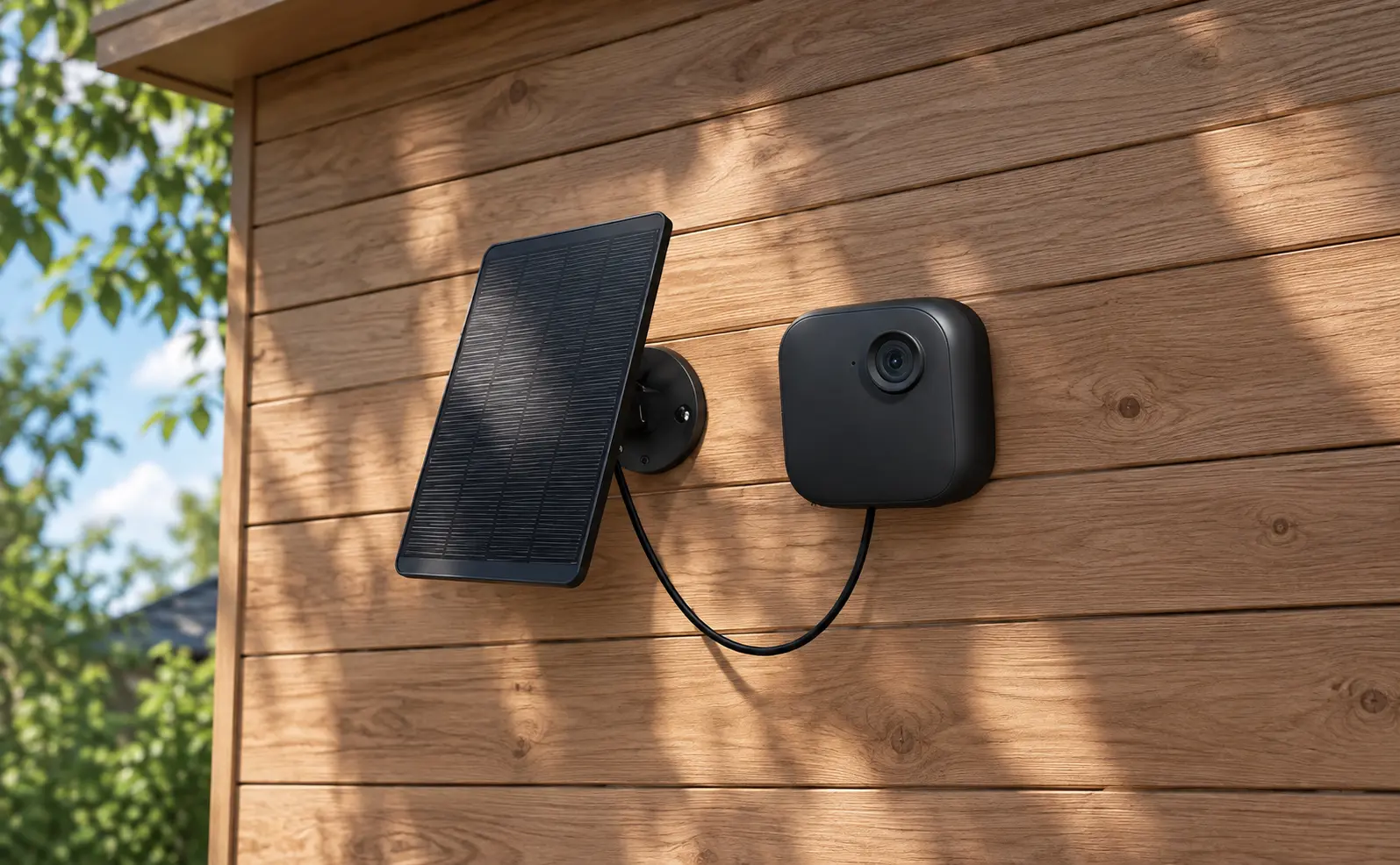
Blink is Amazon’s budget security brand. It has a loyal following among buyers wanting a solar security camera for home use without premium pricing.
You simply add the Solaris unit (panel+battery) to your existing Blink Outdoor 4 and instantly have an affordable solar outdoor security camera setup. Plus, the prior AA battery can keep your camera running during weeks of no sun. This is an advantage this model has over the other cameras in this list.
Quick specs
- Price: roughly $140 total (camera ~$100 + Solaris solar panel ~$40)
- 1080p HD resolution, 143° field of view
- Up to 2-year battery life on AA lithium; when using Solaris, remove AAs and the solar unit’s built-in rechargeable pack powers the camera
- Enhanced dual-zone motion detection
- Two-way talk
- Cloud storage (subscription) or local via Sync Module + USB
- Deep Alexa and Amazon Fire TV integration
- Setup difficulty: Easy; camera mounts to the integrated Solaris solar charging assembly (or separate mounts), ~25-30 minutes total with Sync Module
Pros
- Lowest total cost of ownership on this list (since you already have the camera and now just need to buy the Solaris unit for 40$-60$)
- Exceptional baseline battery life
- Simple, quick setup process
- Strong Alexa ecosystem support
Cons
The 1080p resolution is the least detailed in this camera’s footage. It can be difficult when you are trying to make out faces or plates at a distance.
For ‘Person detection,’ it requires an active Blink Subscription Plan (around $3/month or $30/year per camera, or ~$10/month for a household Plus plan). In other words, “subscription-free” is only partly true. While basic alerts are free, AI detection isn’t.
6. Reolink Altas (2K Edition) — Best Continuous Pre-Recording Solar Security Camera for Catching Missed Motion
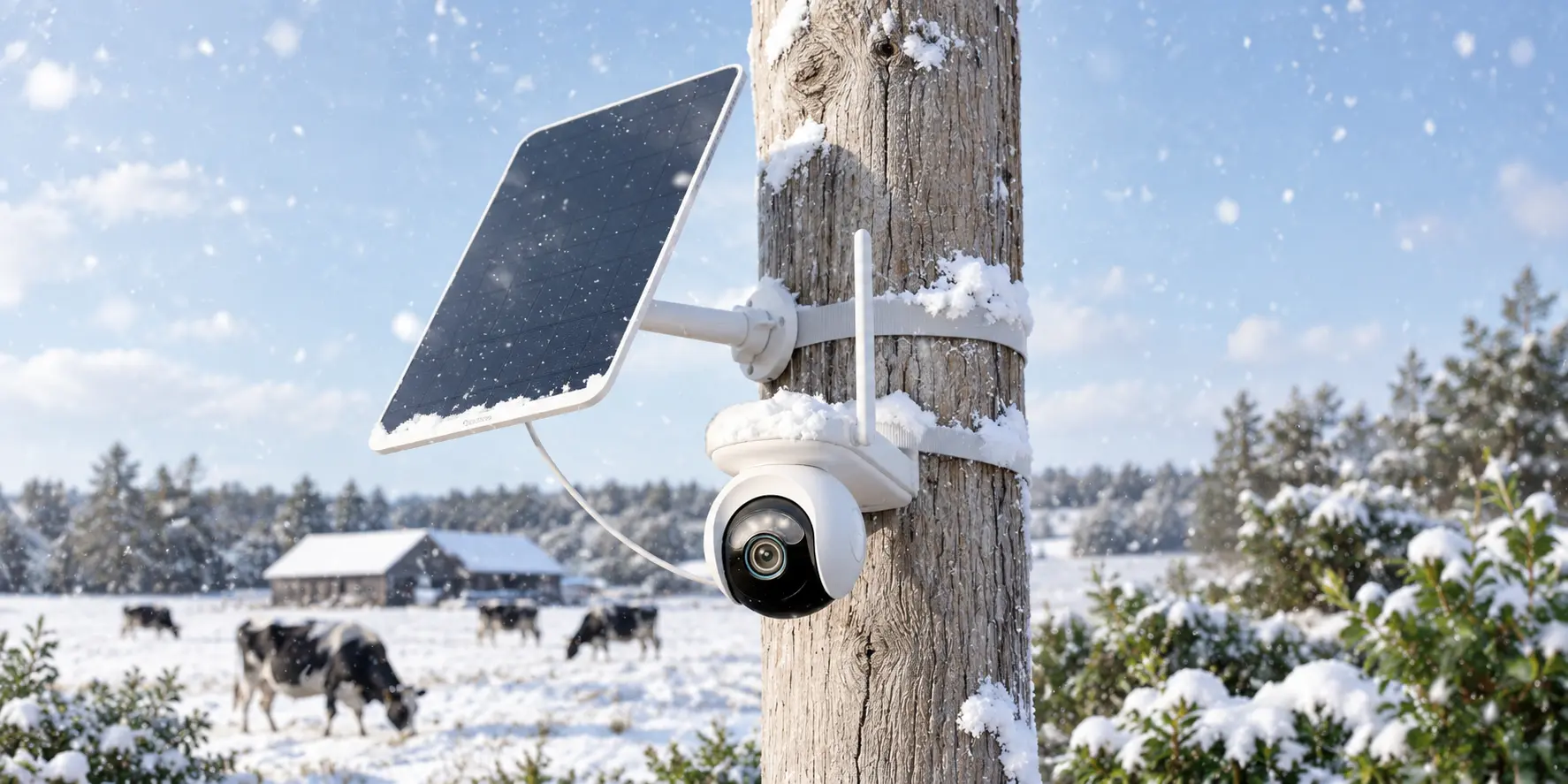
Reolink, as a brand, shows up again on this list. The Reolink Altas (2K Edition) trades some of the Argus 4 Pro’s resolution and dual-lens design for something arguably more useful day-to-day. It records 10 seconds of footage buffered before motion is even detected. This means you’re far less likely to miss the actual moment a package is taken. It can also run continuous recording when needed.
Quick specs
- Price: roughly $180–$220
- 2K resolution, F1.0 lens for strong low-light gathering
- 10-second motion-triggered pre-recording (also supports continuous local recording at reduced frame rate for several days on a full charge)
- ColorX night vision (full color without relying on spotlight; built-in spotlights available)
- Dual-band Wi-Fi 6
- Large-capacity battery, rated for extended multi-month standalone use
- No subscription required, local plus optional cloud storage
- Setup difficulty: Easy; bracket mount, similar install to the Argus 4 Pro, ~20 minutes
Pros
- Pre-recording genuinely catches events other cameras miss
- Strong low-light lens performance
- No mandatory subscription for core features
- Long standalone battery life even without much sun
Cons
At 2K, it sits a notch below the 4K options here for fine detail. So, buyers comparing it directly against Reolink’s own Argus 4 Pro may find that gap decisive.
7. Soliom S600 Pan-Tilt Solar Security Camera kit — Best Budget Pan-and-Tilt Solution
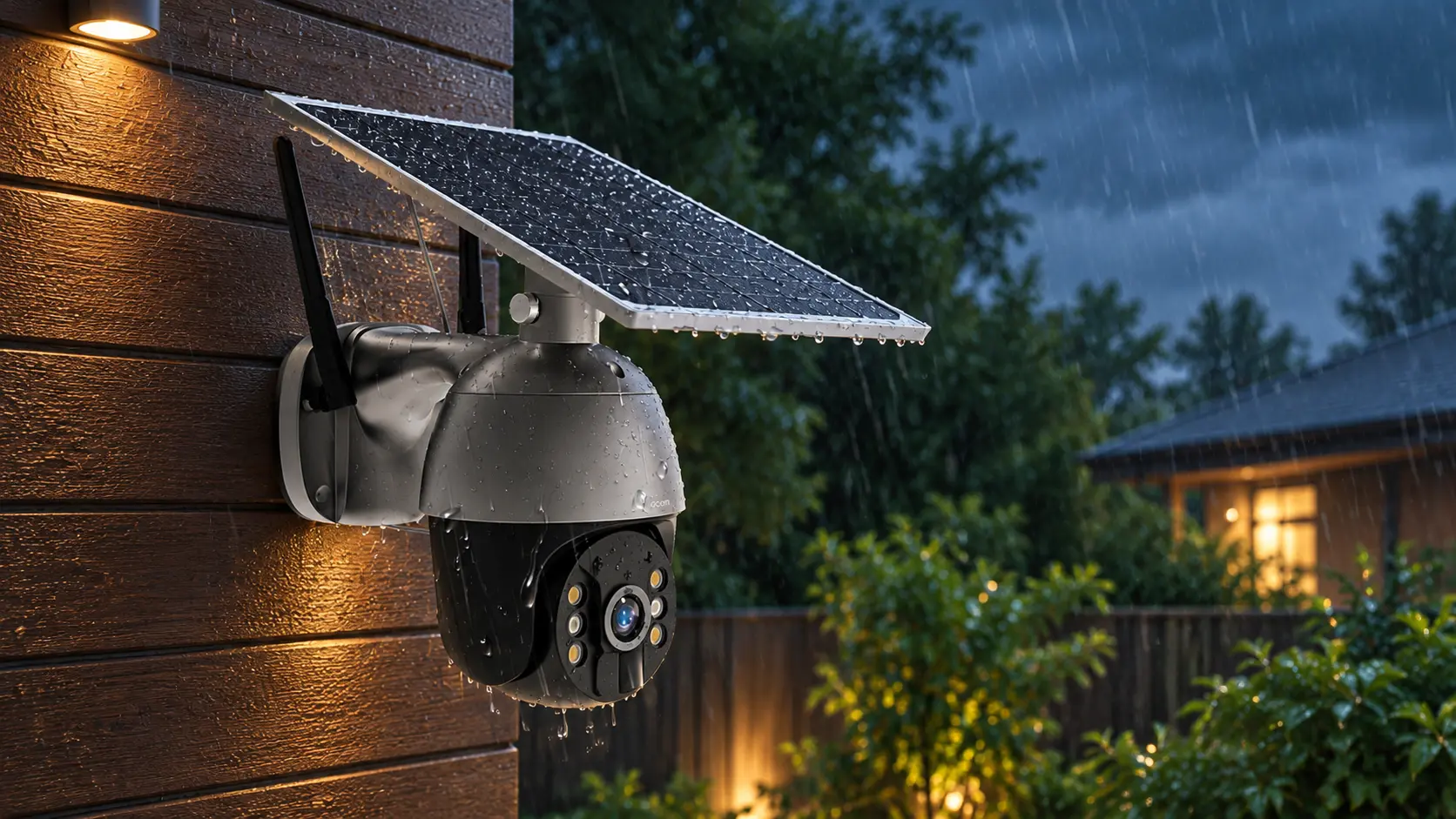
Soliom S600 Pan-Tilt Solar Kit has gained traction among buyers monitoring remote property, like cabins, farms, construction sites, and off-grid locations, thanks to its 4G LTE variant that can remove WiFi entirely. Solar enthusiasts widely consider it “underrated” as it costs meaningfully less than the bigger names above.
Quick specs
- Price: roughly $90–$145 depending on WiFi vs. 4G LTE version
- 1080p HD resolution (higher-res 2K/5MP variants available in the series)
- 320° pan / 90° tilt, 3x digital zoom
- Color night vision up to 32 feet with motion-activated spotlight
- 9000mAh solar-rechargeable battery
- Two-way talk, Alexa-compatible
- IP65 weatherproof
- Setup difficulty: Moderate; separate solar panel, app pairing, ~30 minutes
Pros
- Lowest price point on this list by a clear margin
- Wide 320°/90° pan-tilt coverage
- Large battery for the price
- 4G LTE variant available for off-grid use
Cons
Users commonly flag a 128GB microSD card limit. It fills up faster than pricier rivals, which allow larger spaces. Some owners also report intermittent audio static during two-way talk. Also, resolution tops out at 1080p on the base model, lagging behind the 4K and 3K options higher on this list.
How Your Climate Changes Which Camera Makes Sense
Spec sheets rarely mention this, but where you live changes which camera on this list is right for you. A solar-powered outdoor security camera rated for “months of battery life” is usually tested under decent sun. However, real-world performance drops fast once winter, cloud cover, or a shaded install point comes into play.
Sun Belt (Arizona, Texas, Southern California, Florida): Almost any camera here, including smaller-panel options like the Eufy S340 or Tapo MagCam, stays topped off year-round. Mounting angle matters more than panel size.
Pacific Northwest and Northeast: In these areas, overcast stretches can run for weeks. So you need larger batteries or panels. For instance, the Argus 4 Pro’s 6W panel, the Tapo MagCam’s 10,000mAh battery, or the Soliom’s 9000mAh cell
Northern/Midwest winters: Expect reduced solar output November through February regardless of camera. Budget for occasional manual charging even on the best-panel options, and mount panels as close to true south as possible (steeper 45–60° angle helps in winter).
Shaded lots and dense tree cover: Panel wattage matters less than an unobstructed 2- 3 hours of direct daily sun.
Detailed Comparison Table
Here’s how all seven cameras stack up on resolution, storage, power, and price. This is meant to help you narrow things down based on what matters for your specific yard, driveway, or remote property.
| Camera | Price (USD) | Resolution | Coverage | Night Vision | Storage | Subscription? |
|---|---|---|---|---|---|---|
| Eufy SoloCam S340 | $150–$200 | 3K + 2K dual-lens | 355° pan / 70° tilt | Color, AI-assisted | 8GB local built-in | No |
| Reolink Argus 4 Pro Solar | $190–$220 | 4K 8MP dual-lens | 180° panoramic | ColorX (spotlight backup) | microSD up to 512GB | No |
| Ring Stick Up Cam Pro Solar | $210–$230 | 1080p HDR | Fixed + radar 3D | Color | Cloud (sub history) | Partial (Ring Protect) |
| TP-Link Tapo MagCam 4K | $150–$170 | 4K 8MP | Fixed, magnetic | Starlight color | Local or optional cloud | No |
| Blink Outdoor 4 + Solaris | ~$140 | 1080p | Fixed, 143° FOV | IR (B&W) | Cloud or Sync+USB | Partial |
| Reolink Altas (2K) | $180–$220 | 2K | Fixed, wide lens | ColorX (spotlight backup) | Local + optional cloud | No |
| Soliom S600 Pan-Tilt | $90–$145 | 1080p | 320° pan / 90° tilt | Color (spotlight) | microSD up to 128GB | No (data for 4G) |
Key takeaways:
Best overall value: Eufy SoloCam S340 – dual-lens flexibility, full pan-tilt, no subscription
Best resolution: Reolink Argus 4 Pro Solar or TP-Link Tapo MagCam 4K Solar
Best smart home integration: Ring Stick Up Cam Pro Solar
Best on a tight budget: Blink Outdoor 4 or Soliom S600
Best for remote or off-grid property: Soliom S600 (4G LTE version)
Best for catching missed motion events: Reolink Altas (2K Edition)
Final Words
A solar outdoor security camera genuinely pays for itself in peace of mind once it’s mounted and notifications start rolling in reliably. Whichever camera you pick, the goals are the same. It should provide reliable coverage without wires, there should be no surprise fees, and no constant recharging. Explore Solar Energy Gadgets for more guidance on clean tech home appliances.
FAQs on Solar Security Cameras USA
1. What is the best solar security camera under $250?
The Eufy SoloCam S340 is a strong overall choice under $250 thanks to its dual-lens design, 360° pan-and-tilt coverage, AI detection, built-in storage, and subscription-free operation. For 4K video, the Reolink Argus 4 Pro Solar and TP-Link Tapo MagCam 4K Solar are excellent alternatives.
2. Are solar security cameras worth buying in the USA?
Yes. Solar security cameras can be a practical choice for US homes, driveways, backyards, farms, garages, and remote properties. They reduce the need for power wiring and can operate from stored battery energy when sunlight is unavailable.
3. Do solar security cameras work at night?
Yes. Solar security cameras charge their batteries during daylight and use stored energy at night. Depending on the model, they may offer infrared, color, or spotlight-assisted night vision.
4. Do solar security cameras work in cloudy weather?
Yes, although charging can be slower during extended cloudy periods. Cameras with larger batteries or higher-wattage solar panels generally handle low-sun conditions better. Your local climate and whether the panel receives direct sunlight can significantly affect performance.
5. Can a solar security camera work without Wi-Fi?
Yes, but you need a 4G LTE solar security camera. Standard Wi-Fi cameras require a wireless network, while models such as the Soliom S600 LTE version can operate in locations without traditional Wi-Fi, making them useful for remote properties.
6. Do solar security cameras require a monthly subscription?
Not necessarily. Several cameras in this list support local storage without a mandatory subscription. However, some brands charge for advanced cloud storage or AI features. Always check exactly which features are included without a subscription before buying.
7. What is the best solar security camera with local storage?
The Reolink Argus 4 Pro Solar is one of the strongest options for buyers who want high-resolution video and local storage. It supports microSD storage up to 512GB and does not require a subscription for core recording features.
Solar Energy Gadgets is a premier global hub for original, expert-led solar product reviews. Our dedicated team of specialists rigorously tests the latest renewable energy technology from around the world to ensure our readers receive unbiased and practical advice. Whether you are outfitting a suburban home or looking for the best off-grid gear, we provide the insights you need to harness the power of the sun with confidence.