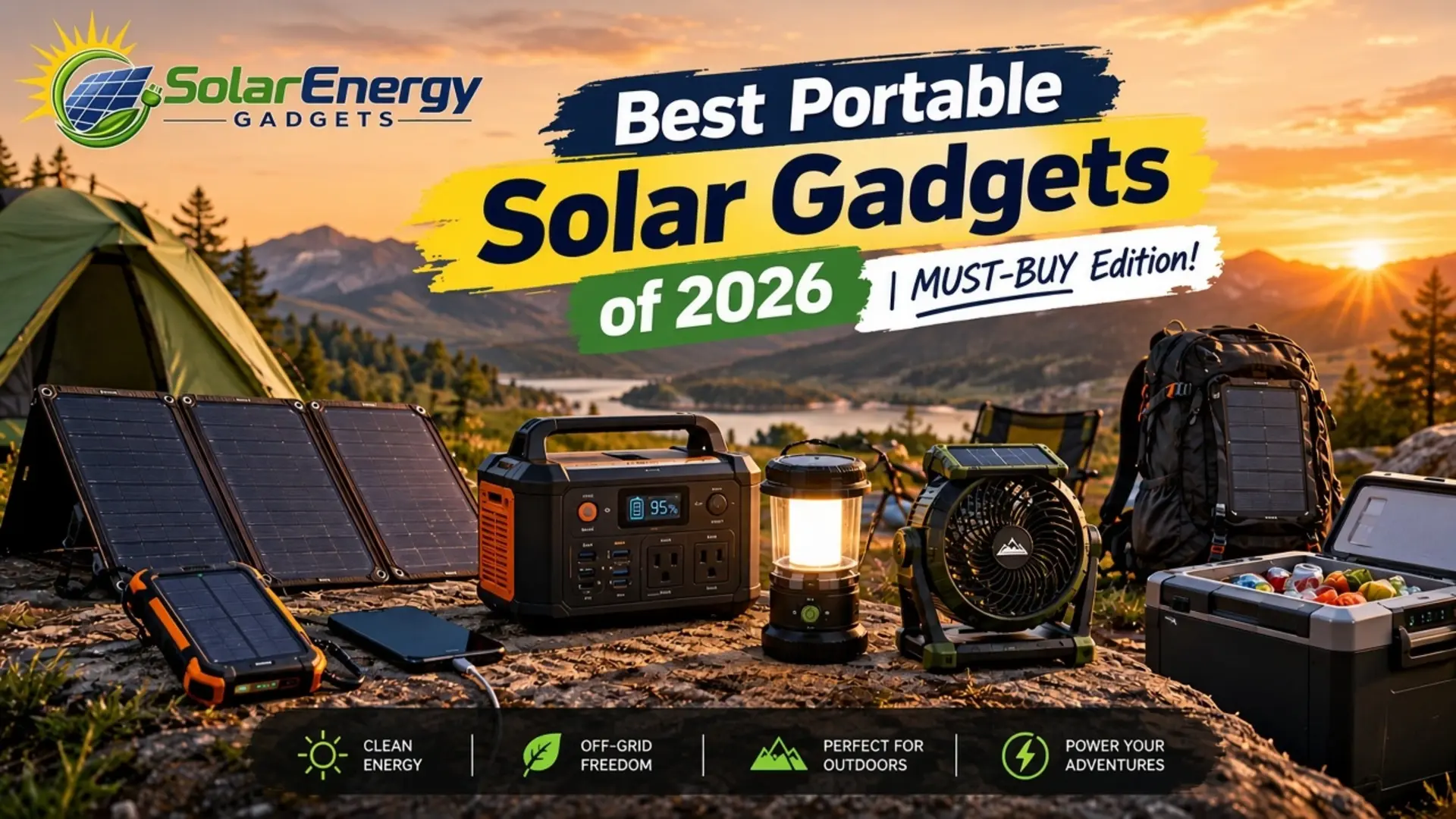
Shopping for the best portable solar gadgets can be quite confusing if you are new to the niche. Solar is one of the hottest tags in 2026. So many businesses are slapping a solar panel on whatever outdoor item still lacks one and selling it as a solar-powered device. That made shopping for a truly useful portable solar gadget pretty stressful.
There are broadly two types of solar gadgets for camping on the market. It either charges a device or appliance or is itself one (lights, fan, cooler, heater). That means the number of portable solar gadgets worth buying is actually small – which is contrary to what brands and retailers make you think.
To save you from buying junk, our team compiled a list of the best solar gadgets for 2026 and grouped them into three major categories. Pick one item from each category to match your needs, and you get the most minimalist list of must-have solar gadgets.
Why Choose This Product? Benefits, Trade-Offs & Long-Term Value
Choosing the best portable solar gadgets lets you travel to exotic, off-grid, and extremely remote camping locations. You don’t need to give up the privilege of a phone and everyday electrical appliances to visit them. This means you have a safer and more fulfilling trip
These gadgets mean not feeling sorry for that one picture you couldn’t take because your device was out of charge. Or excited for the trip but equally dreading the thought of showering with cold water or a suffocating tent. The portable solar gadgets make it so that you enjoy the beauty and freedom of prehistoric human life while not missing the perks of the modern era.
Also, not having these gadgets is truly a loss in 2026 when solar tech is at its peak. Newer cells are converting almost a quarter of the sunlight that hits them into energy. This has made possible the emergence of highly useful solar gadgets that might sound like fiction if you told somebody from just over a decade ago.
- Visit far-away locations that felt scary because you would rarely find a wall socket there
- Don’t get totally disconnected from civilization since your phone’s battery is dead
- No interruption in content creating or freelance work because the laptop is out of power
- Enjoy cooling and ventilation that makes your tent really feel like a home
- Take a hot shower on a remote campsite on a chilly morning
- Don’t miss out on historic solar technology
- Once you are back home, you will find these items to be useful solar gadgets for everyday life too.
Why Are Portable Solar Products Getting Popular?
People are buying solar-powered gadgets because it sets them free from the grid. Things like power outages or traveling off-grid won’t keep you from using electricity. Making your own electricity is liberating and gives you more control over life.
Outage Events
Overwhelming demand for grid electricity and weather events are always making sure that outages don’t become a rare event. Solar-powered gadgets can be extremely useful during these times. No need to stop your life and wait for the power to come back.
Outdoorsy Lifestyle
Classrooms and cubicles lock us indoors for most of our lives. And people are increasingly aware of the toll that can take. So, camping and outdoor time are now essential routines rather than something they did on that one summer many years ago. Plus, van-living is also more common than ever due to its nomadic appeal. The rise of an outdoorsy lifestyle has made solar gadgets for outdoor use essential rather than something nice to have.
Innovative Solar Gadgets
A decade ago, solar gadgets were more of a hobby item than for serious use. The cells could barely turn even 18 percent of the sunlight into electricity. So solar gadgets were more of a concept than a solid product. Solar tech has come a long way since then. Cells these days can easily turn 20-24% of the sunlight into power we can use. Thus, giving buyers a valid reason to buy solar-powered devices.
No ongoing Expenses
A device that runs on batteries or fuel means committing to ongoing expenses in the future. Plus, batteries and fuel equal the risk of chemical leakage, fumes, and carbon emissions. In contrast, useful solar gadgets for everyday life are self-sustaining and save you the hassle. Plus, you are helping the world by using eco-friendly gadgets.
10 Best Portable Solar Gadgets for USA 2026
We have compiled quite a long list of the best portable solar gadgets of 2026 here. However, as mentioned before, you only need a few of them. For camping or travelling, you need one gadget to charge your devices, one to give you light, and another to keep warm/cool. The list is long to help you consider all the options available.
Quick comparison of the best portable solar gadgets of 2026:
| Gadget Category | Typical Price | Typical Weight | Best For | Our Recommended Products |
| Foldable Solar Panel Charger | $40–$300+ | Under 1 lb – 11 lbs | Direct device/power-station charging | Anker SOLIX 100W Portable Solar Panel, Jackery solar panels, Goal Zero solar panels |
| Solar Power Bank | $25–$60 | 12–20 oz | Everyday backup + light outdoor use | Hiluckey solar phone chargers, BLAVOR power banks, Anker Portable Power Banks |
| Portable Solar Generator | $250–$3,000+ | 7–40+ lbs | Real appliances, home blackout backup | Jackery Explorer 300 Plus portable power station, Anker SOLIX C300 Portable Power Station, Goal Zero Yeti 300 portable power station |
| Solar Backpack | $45–$180 | Adds 1–2 lbs to pack weight | Hands-free charging on the move | Voltaic System’s solar backpack, ECEEN’s solar backpacks |
| Solar Phone Cases & Car Accessories | $30–$1,500+ | Ounces to vehicle-mounted | Everyday trickle charge, vehicle power | iPowerUp solar phone cases, Worksport solar covers for vehicles |
| Solar Camping Fan | $20–$35 | Under 1 lb | Tent/RV cooling + multi-tool convenience | Drchop solar camping fans, Innopower rechargeable camping fans with solar panel |
| Solar-Powered Coolers/Fridges | $250–$1,000+ | 30–55+ lbs | Food preservation, multi-day trips, van life | ecoCalm electric cooler battery refrigerator, ACOPOWER LiONCooler Pro |
| Solar Tent/Attic Ventilation & Shade | $100-$200 | 3–15+ lbs (or vehicle) | Heat management, van life, overlanding | VEVOR 35W Solar Attic Fan |
| Solar Showers | $20-$40 | Under 1 lb – 40+ lbs | Hot showers, hygiene, car camping | Rhino USA Portable Solar Camp Shower, KIPIDA Solar Shower Bag |
| Solar Camping Lantern | $15–$40 | Under 1 lb | Ultralight camp lighting + emergency light | DIBMS Collapsible Rechargeable Solar Camping Lantern, Lichamp Rechargeable Solar Camping Lantern |
Solar Charging & Power Gadgets
1. Foldable Solar Panel Chargers
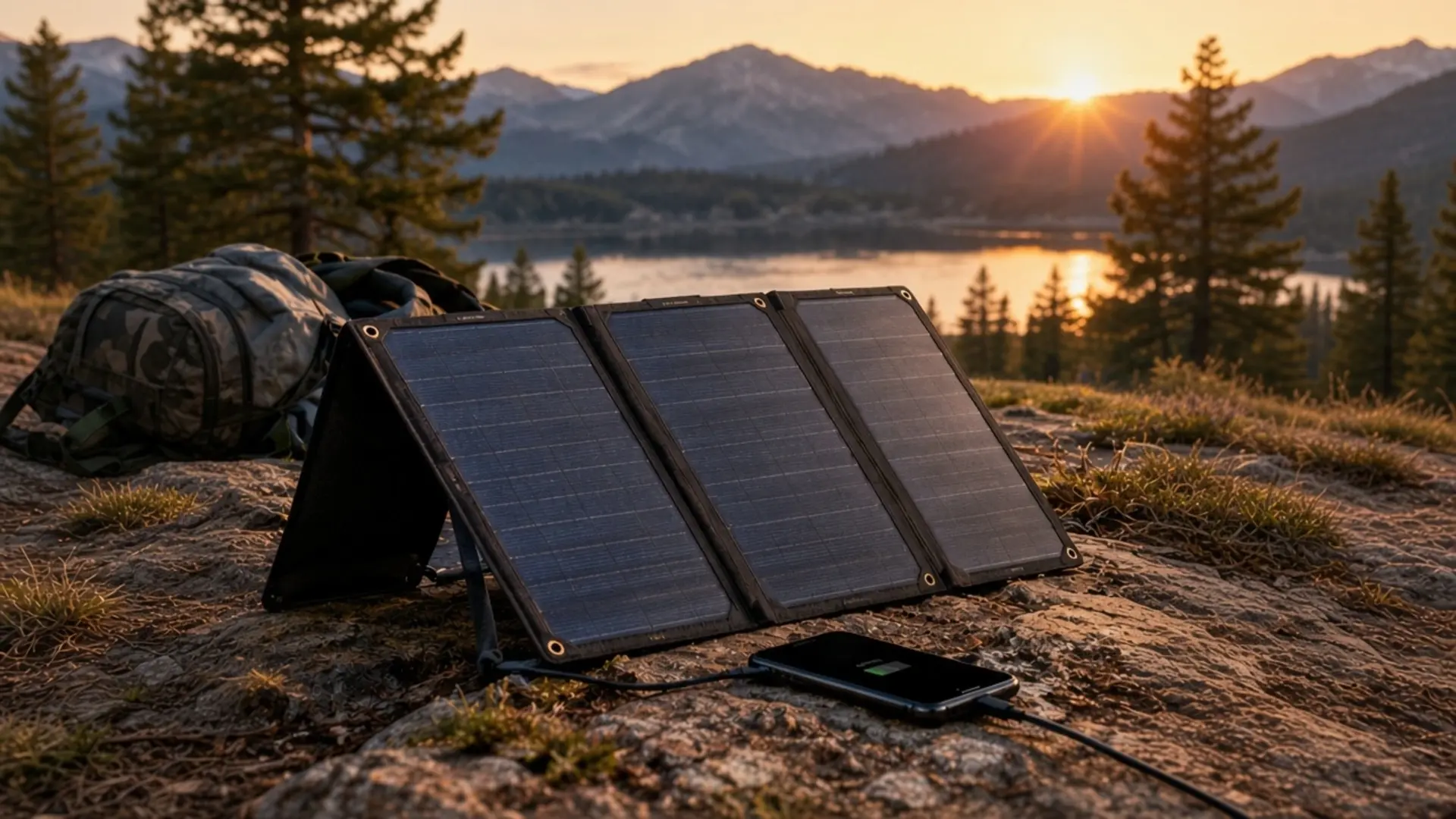
These are among the most minimalist off-grid solar gadgets on the market. It’s essentially two or four mini solar panels put together in a foldable frame.
There is no battery with it. Just panels with connectors (USB-C, USB-A, or DC). Plus, an adjustable kickstand or hanging grommets to angle the panel toward the sun. You simply connect your tablet or mobile to the Foldable Solar Panel Chargers, and it will start charging.
Since there is no battery to store what the charger is generating, your device only keeps charging as long as the panels are getting sunlight.
Compact 20-25 W chargers are usually $40. Those are good enough for charging most of the smaller devices that use DC. There are also 100 W-120W (or bigger) Foldable Solar Panel Chargers for $250-$300 (used as portable power stations). Best to buy a bigger panel since it can charge AC devices and is essential for solar appliances that don’t have one built in.
When folded, these chargers can be the size of a small book to a laptop and weigh 4–11 lbs at most. This makes them one of the best solar gadgets for camping and hiking.
If you are looking for a big panel, the Anker SOLIX 100W Portable Solar Panel is a decent one, in our experience. Jackery solar panels and Goal Zero solar panels are reliable options too.
2. Solar Power Banks (Built-In Solar Panel)
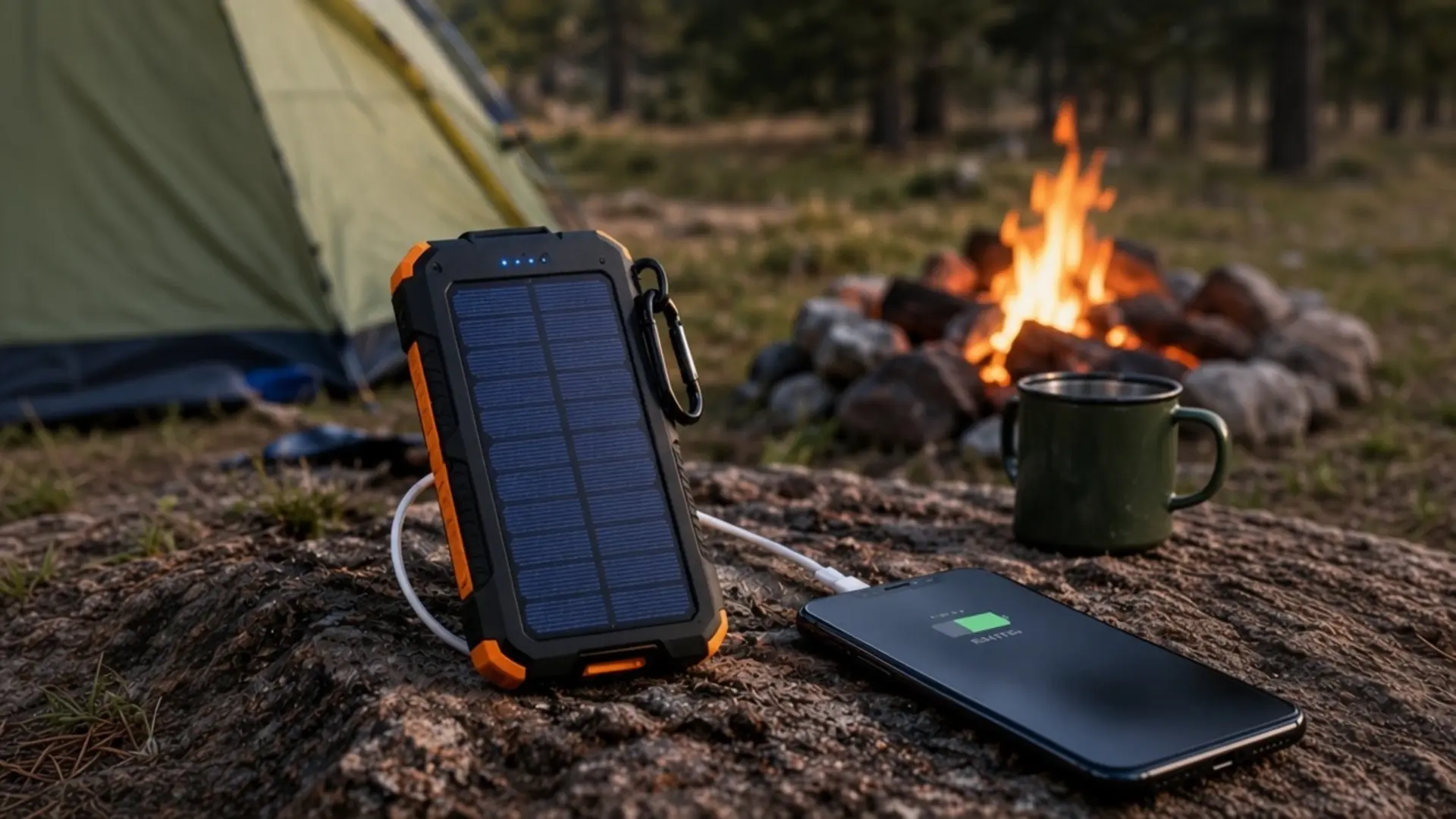
Panel-only chargers are good as long as the sun shines brightly. If the weather suddenly changes, you would wish you had brought your battery-based charger. The Solar Power Banks are the solution.
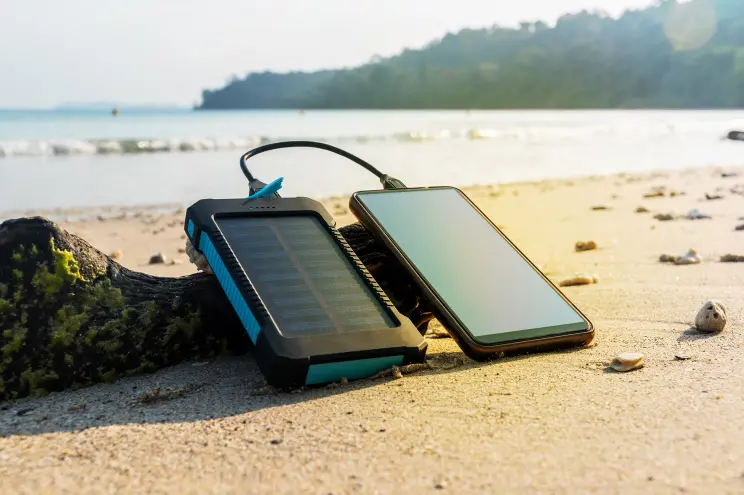
It’s a standard lithium battery pack (10,000–50,000mAh) with a small solar panel, or several fold-out panels, built into the casing. You charge it normally via USB-C, and top it up with sunlight when there’s no outlet around.
Prices sit in the $25–$60 range. They’re heavier than a standard power bank of the same capacity (12–20 oz) but still pocket- or bag-sized.
Note that the built-in solar panels provide only supplemental charging in most real-world conditions. Still, they rank among the most practical solar-powered gadgets for daily carry. Hiluckey solar phone chargers, BLAVOR power banks, and Anker Portable Power Banks are some of the best on the market.
3. Portable Solar Generators (Power Station + Panel Kits)
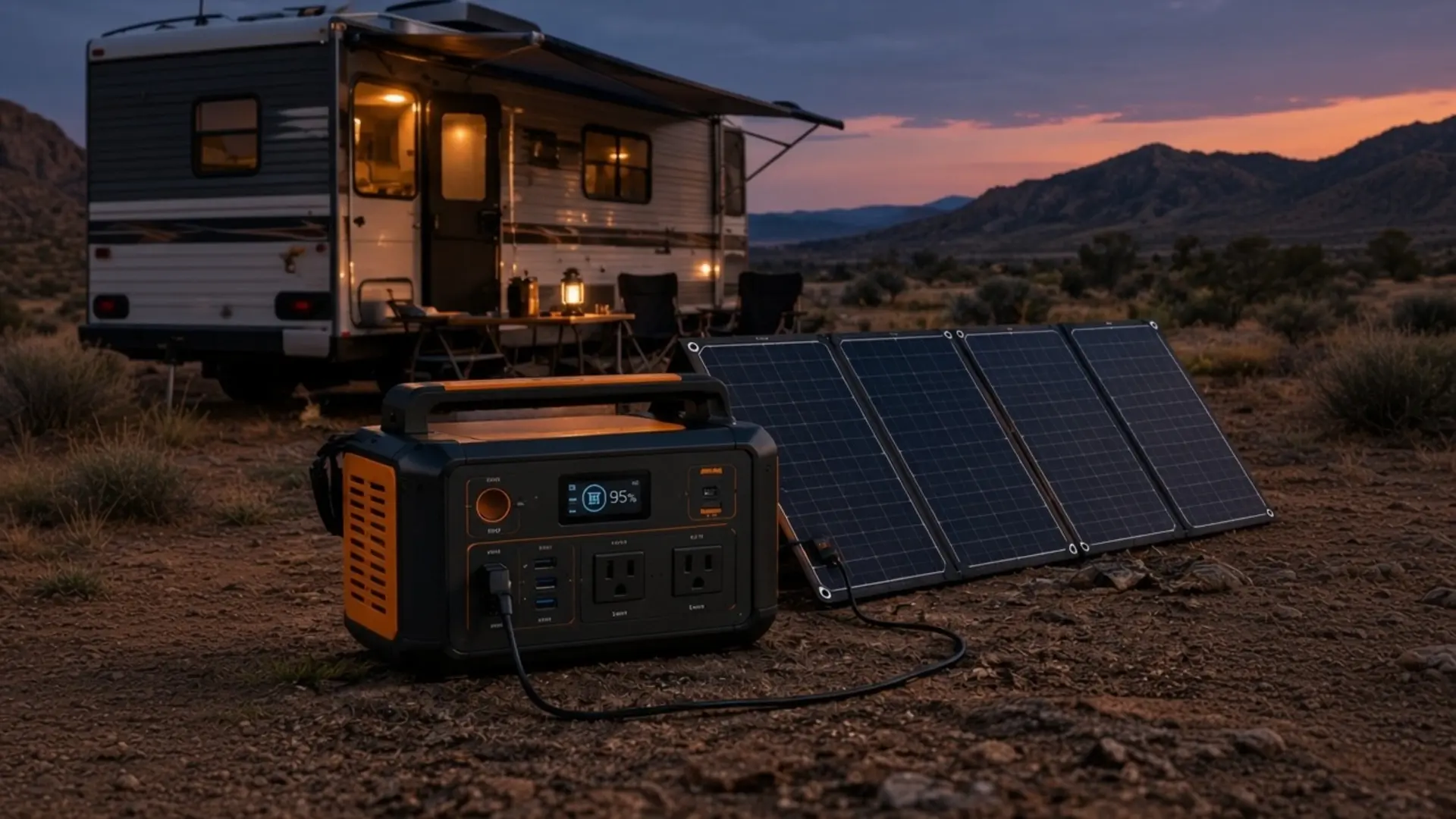
Campers looking for something more powerful to run bigger appliances (or many devices) need solar power generators. These are LiFePO4 power stations with AC outlets, USB ports, and a car socket, paired with (or compatible with) a folding solar panel.
Their capacities range from around 250Wh (phones, lights, a CPAP machine) up to 2,000Wh+ (a mini-fridge, power tools, or a home-office setup during an outage). Expect $250 for an entry-level 250–300Wh kit and $1,500–$3,000+ for a 2,000Wh+ system.
Small solar-powered portable generators can be as small as a lunchbox at 7–16 lbs. Meanwhile, larger ones run 30–40+ lbs and belong in a car trunk, not a backpack. Apart from campers, these are some of the best solar-powered gadgets for emergencies in hurricane-prone states.
Jackery Explorer 300 Plus portable power station, Anker SOLIX C300 Portable Power Station, and Goal Zero Yeti 300 portable power station are reliable portable power stations you can easily pair up with large foldable solar panels.
4. Solar Backpacks
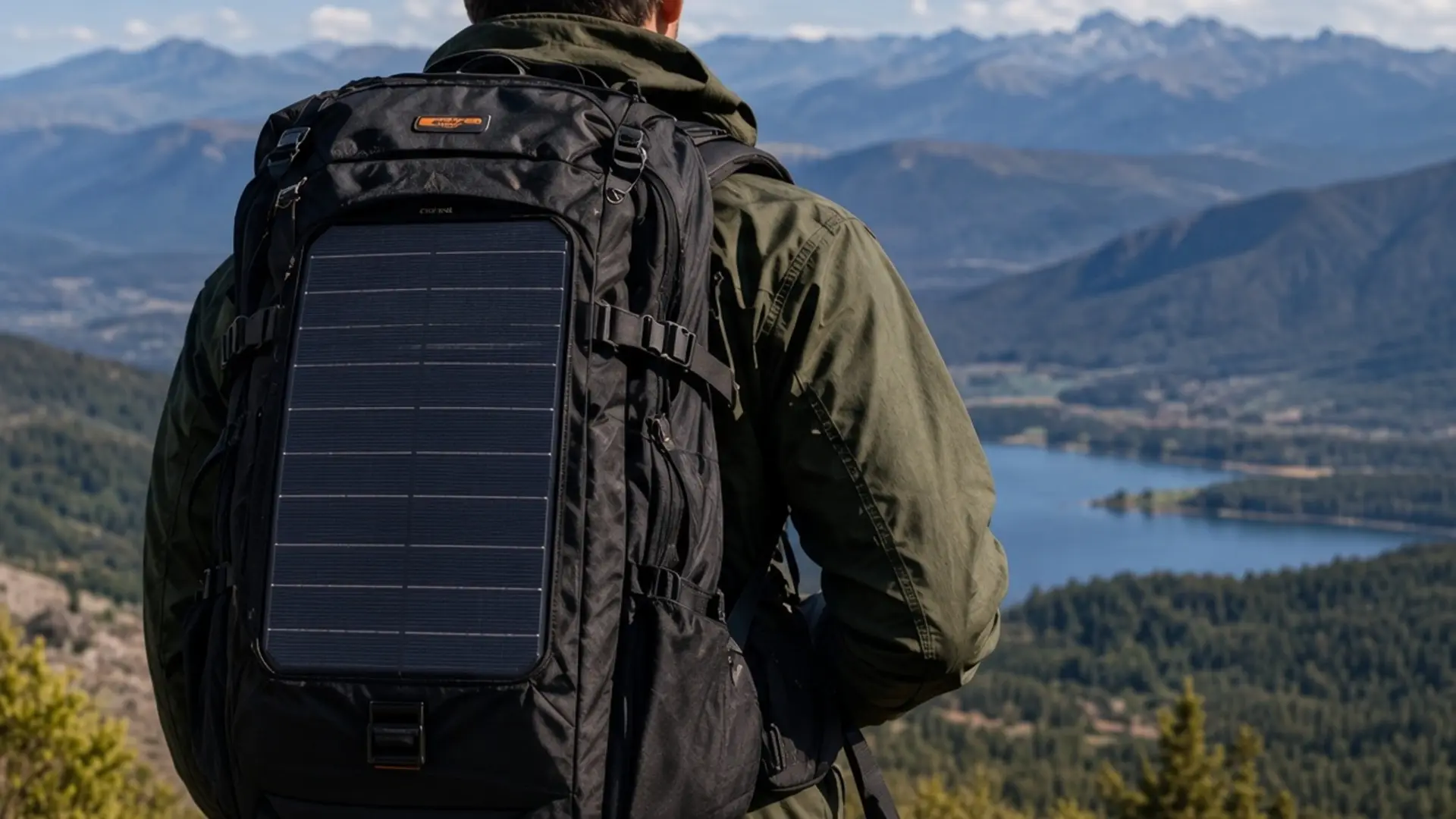
You don’t have to stop your hike just to charge your devices if you have a solar backpack. It will passively keep charging your phone and similar DC devices as you walk along a sunny trail. Regular hikers or photographers on multi-day shoots can find this one particularly useful.
It is essentially a standard daypack or laptop bag, around 20–45L in capacity, with a thin, flexible monocrystalline panel (6–14W) sewn onto the front. The panel connects to an internal or included battery pack (5,000–24,000mAh). It charges passively as you commute, with a USB port on the strap for on-the-go charging.
Prices range from $45–$180 depending on budget or premium quality. The solar backpack adds only about 1–2 lbs over a comparable non-solar pack. However, you will be charging while walking. So, performance can sometimes be limited by angle, shade, and movement. Voltaic System’s solar back packr backpack and ECEEN’s solar backpacks are worth considering.
5. Solar Phone/Device Cases & Solar-Charging Car Accessories
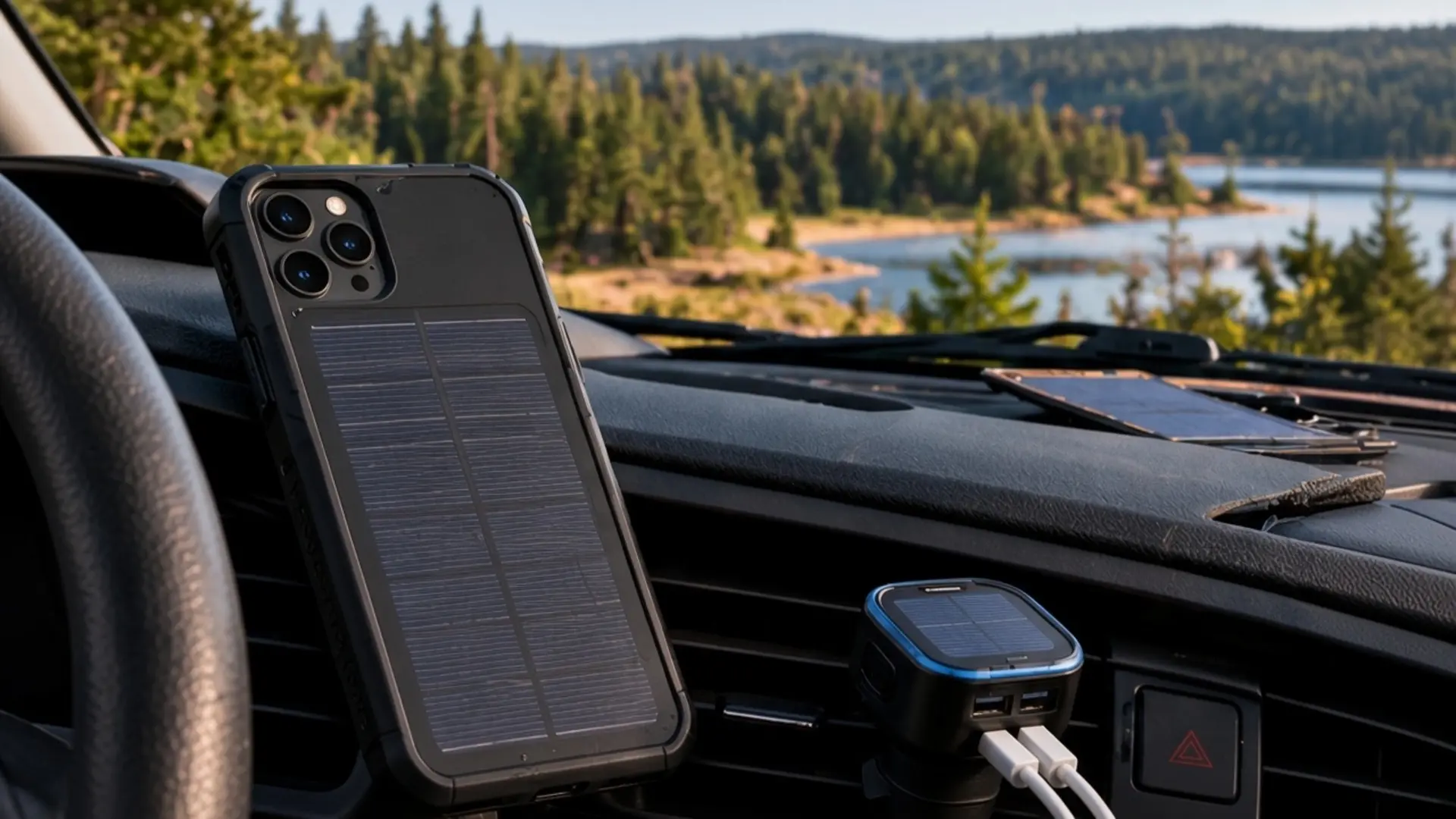
These can be a backup or secondary option on top of your main solar charging gadget. The solar phone cases usually have small integrated solar panels and a backup battery. Larger vehicle-mounted solar solutions include solar tonneau covers or motorcycle cases.
Solar-powered phone cases are supplemental (trickle charge only) and typically cost $30–$100. Vehicle systems can reach several hundred watts and $1,000–$1,500+.
We tested some of the top brands and found the phone-case output to be modest. It can offset standby drain but is not competent enough to fully recharge a modern smartphone in a few hours.
So, compared to the previous solar charging gadgets, this is for light use, or some might even consider hobby item. So, we recommend you buy this only as a secondary solution. iPowerUp solar phone cases and Workspor solar covers for vehicles are well-known in this particular niche.
Climate Control & Comfort Gadgets
These gadgets use solar power (directly or via battery) to manage temperature, airflow, and hygiene. These are comfortable for multi-day camping and van life, and are some of the best portable solar gadgets for off-grid living.
6. Solar-Powered Camping Fans
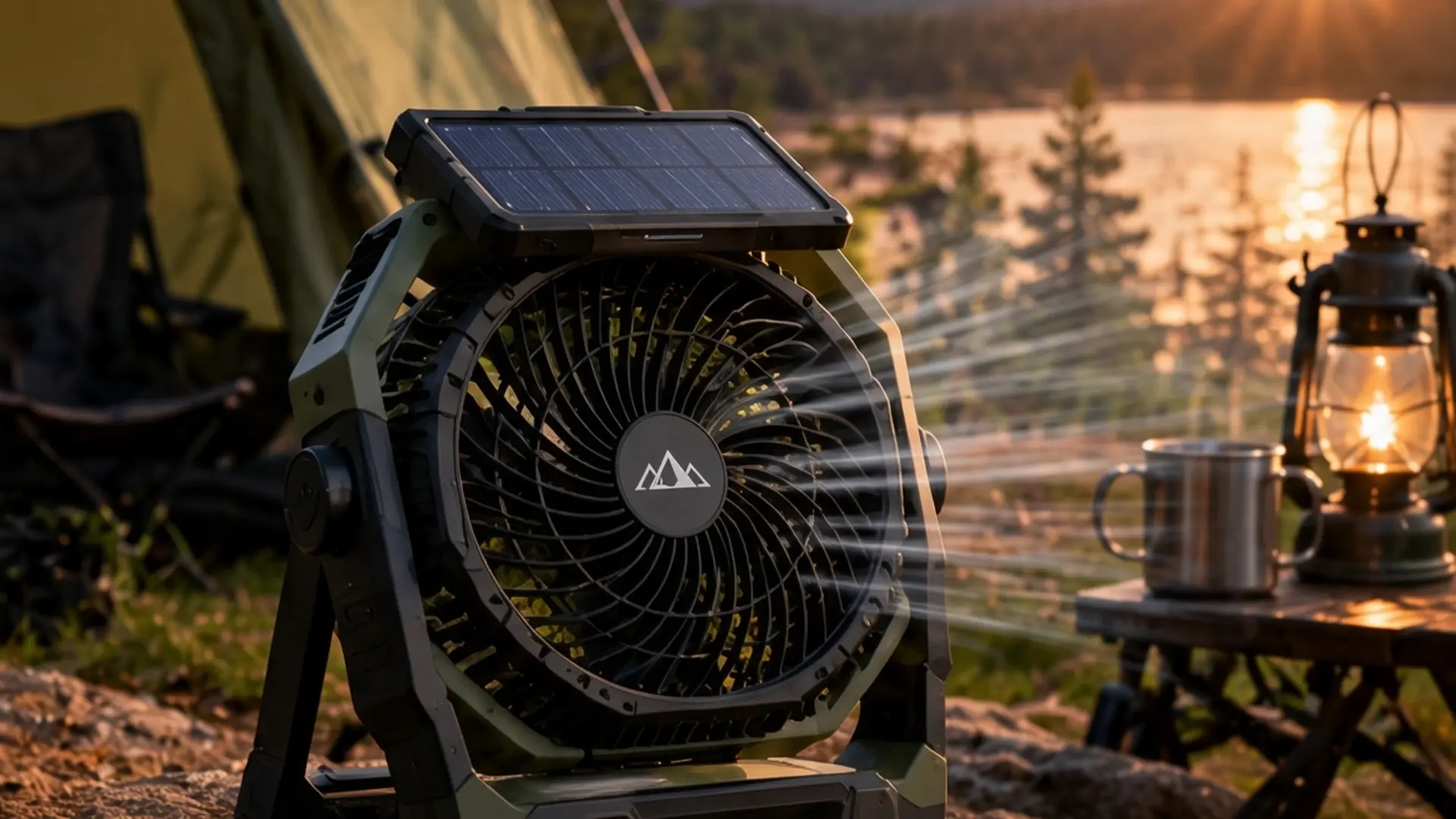
A solar camping fan is a small, quiet battery-powered fan (7–11 inches) with a fold-out or clip-on solar panel and a 10,000–22,000mAh battery. They often also include an LED lantern built into the base. It sits in a tent, RV, or on a table, running 5–40 hours per charge depending on speed and conditions.
Prices are low, generally $20–$35, and most weigh under a pound. These are classic solar gadgets for camping. They solve the single biggest complaint about summer camping: hot, still tent air at night. Drchop solar camping fans and Innopower rechargeable camping fans with solar panels are quite popular among buyers.
7. Solar-Powered Coolers / Fridges
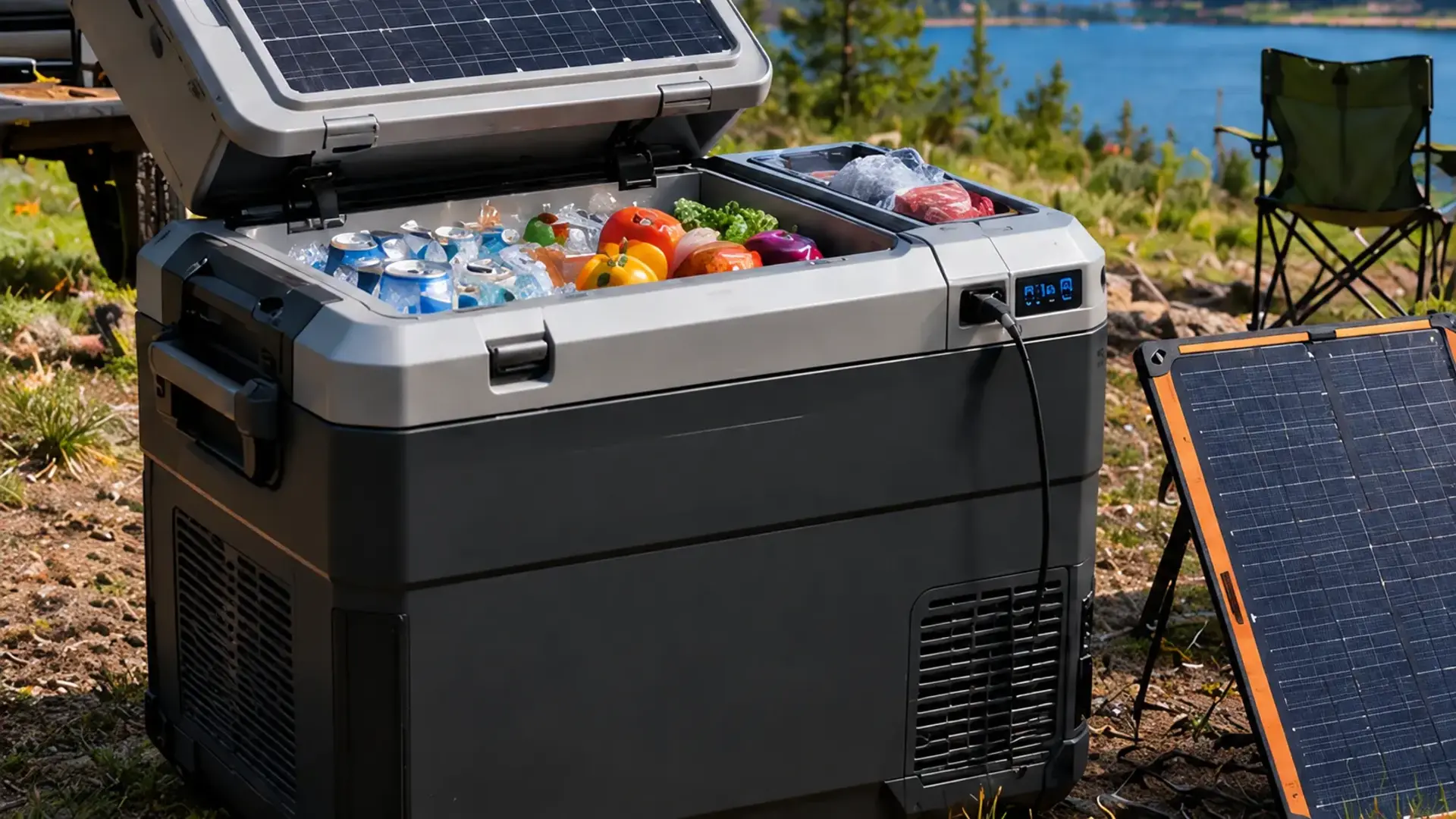
These gadgets are a combination of a fridge, a battery, and a solar panel. Usually, there is a portable compressor fridge or cooler that runs on 12/24V DC (and often AC). Plus, a built-in or detachable LiFePO4 battery and direct solar input.
Capacities typically range from 23–60+ liters. Prices vary widely ($250–$1,000+) depending on size, dual-zone capability, and whether a battery is included. Weight is substantial, 30–55+ lb, so they belong in a vehicle, not a backpack. They are among the best solar-powered gadgets for camping for multi-day trips. ecoCalm electric cooler battery refrigerator and ACOPOWER LiONCooler Pro are good products in the mid-range price.
8. Solar Tent / Attic Ventilation & Shade Systems
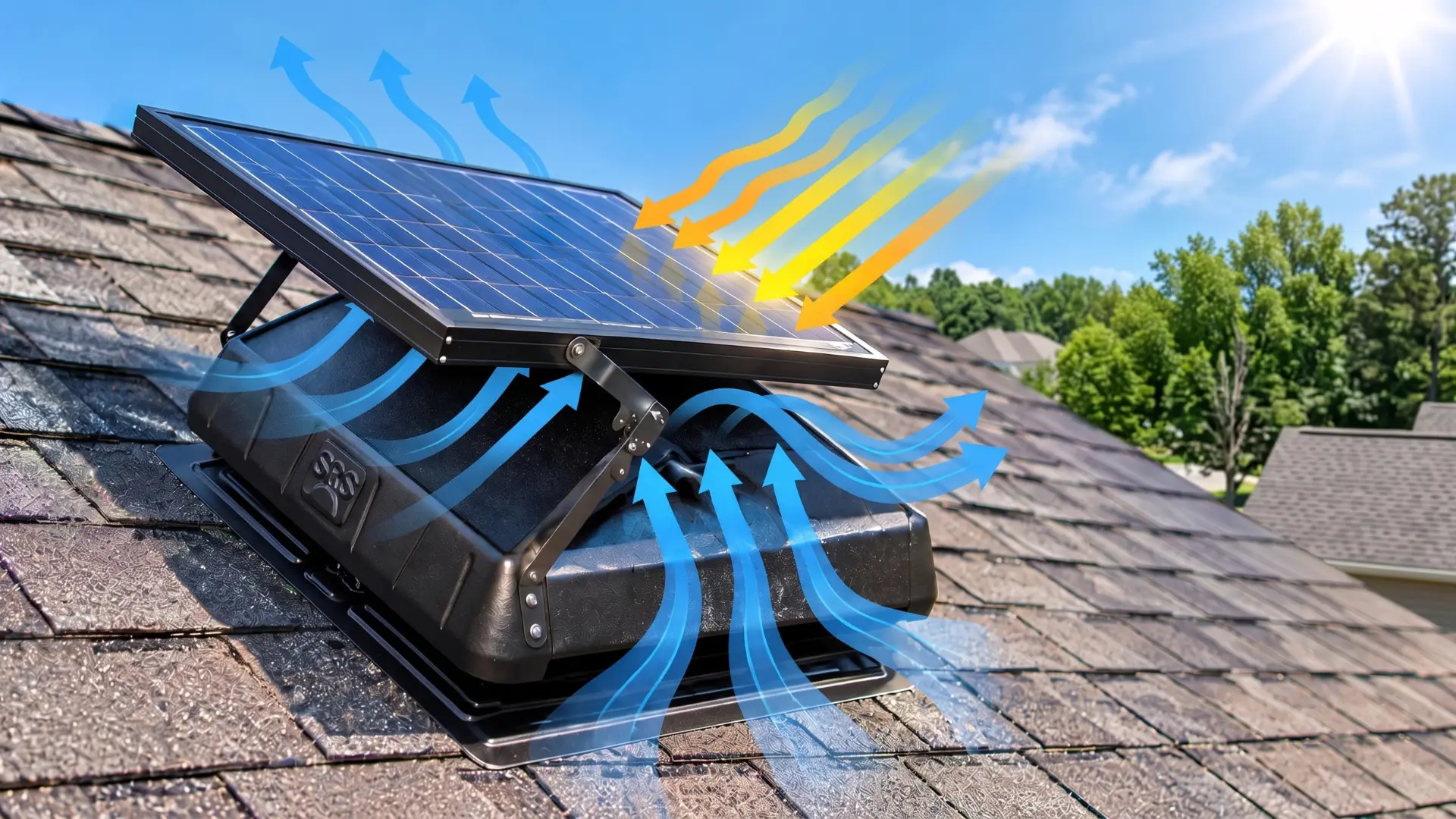
Solar-powered or solar-compatible ventilation and shade solutions reduce heat gain in tents, RVs, vans, or fixed structures. They include high-capacity battery fans that can be topped off by solar, shade-tolerant rigid or flexible panels designed for partial-shade vehicle roofs, and integrated solar-shade setups.
You can find a good solar tent/attic fan within a 100$-200$. Apart from camping, these are also useful solar gadgets for everyday life. The VEVOR 35W Solar Attic Fan is our recommendation for this category.
9. Solar Shower Bags for Camping
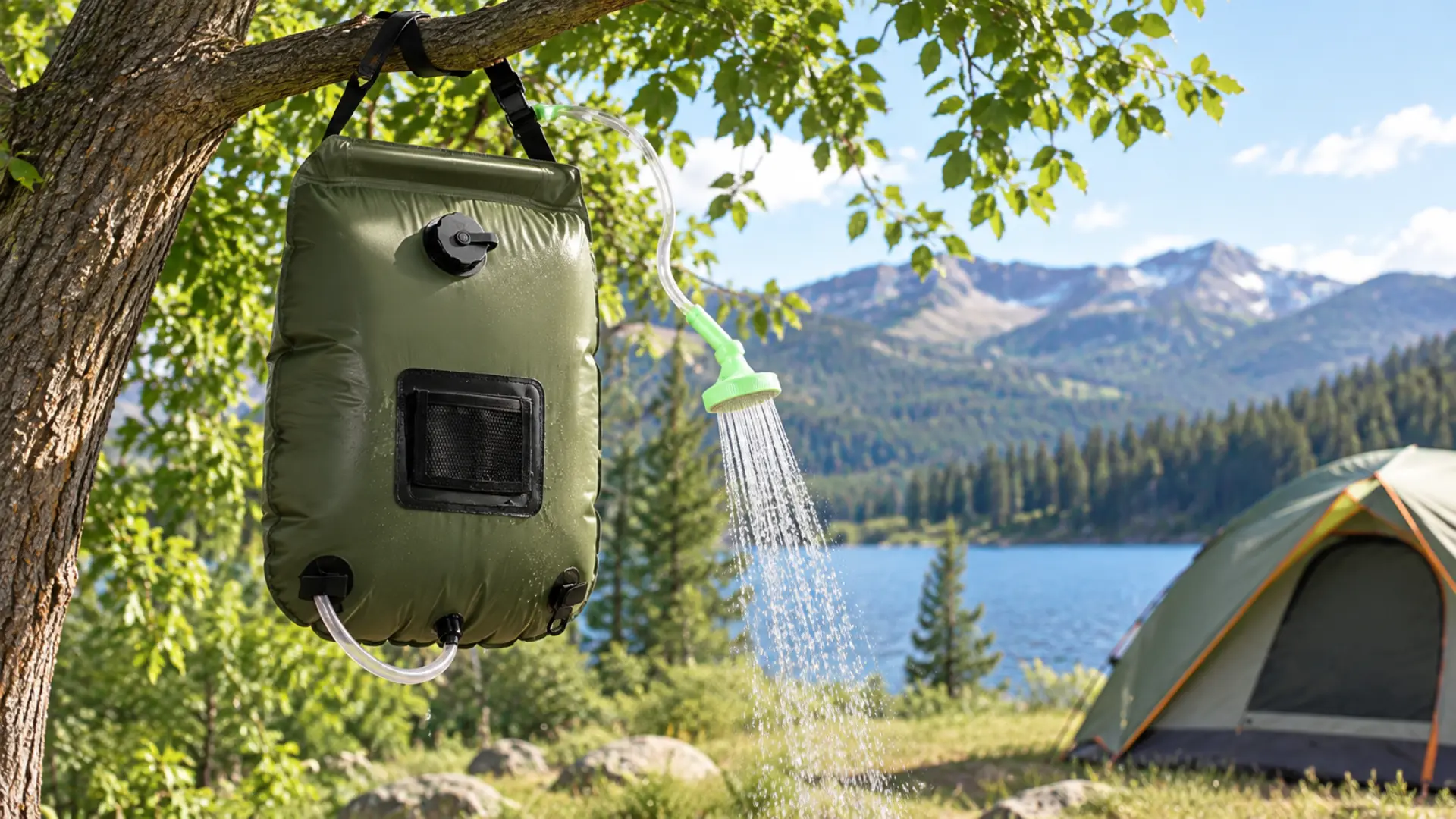
Basic solar water showers are one item on this list that is a solar gadget but does not need a PV panel. These are essentially a black or dark water tank or bag that you can hang from a tree or similar structure.
They absorb electricity directly from the sun, keep it warm, and let you have a warm bath on a cold camping site. The shower is mostly like a modified garden hose. Typically, they have a capacity of five gallons. They cost around 15$-40$. Rhino USA Portable Solar Camp Shower and KIPIDA Solar Shower Bag are fine examples of such products.
You can also find solar showers that come with water heaters compatible with the portable solar panels we talked about earlier. However, they are much pricier and not that important for normal 3-4 day trips.
Solar Lighting Gadgets
10. Solar Camping Lanterns
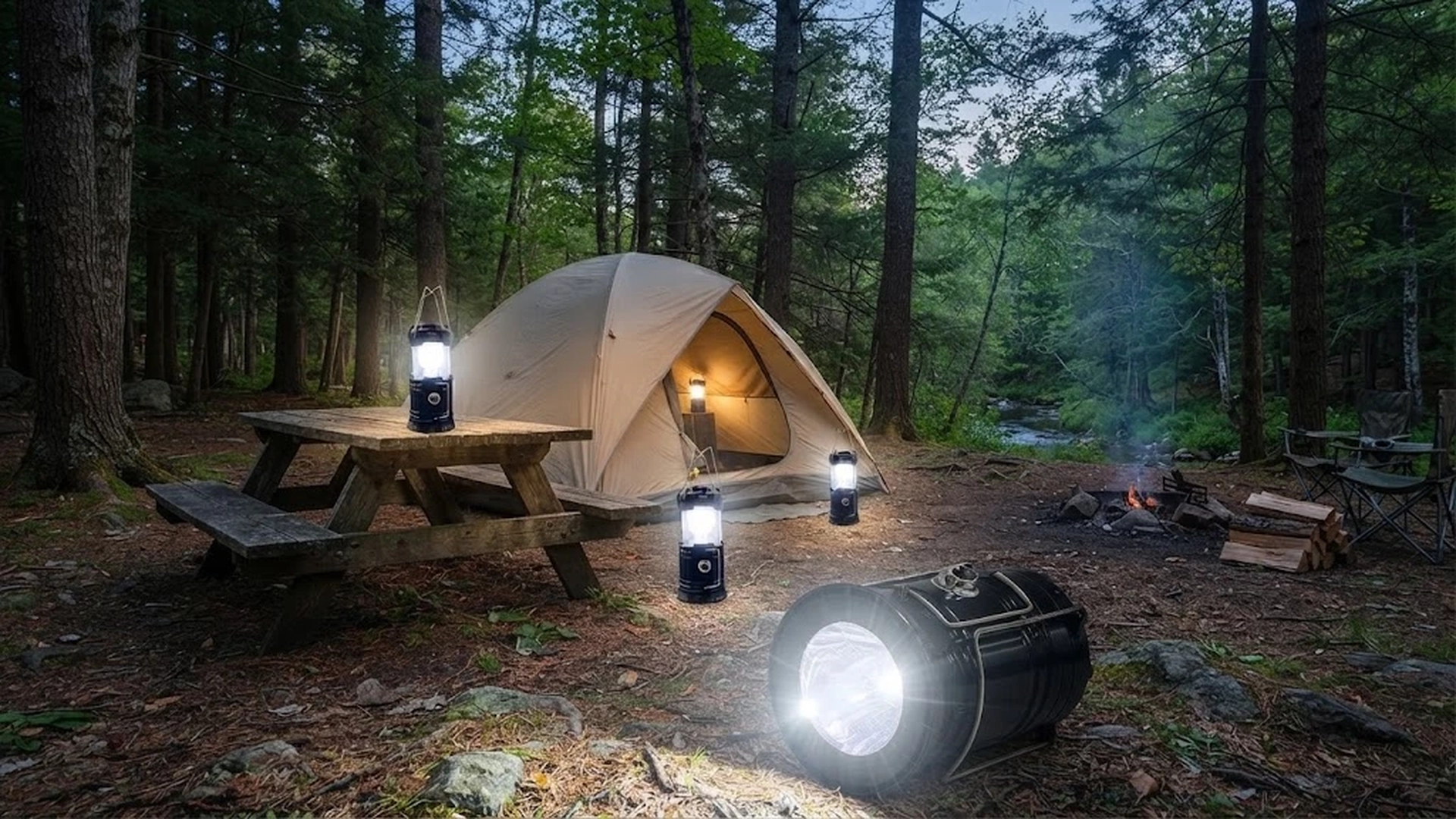
Solar camping lanterns are portable LED lights that have an integrated solar panel (or are compatible with one). You put them in the sun during the daytime (8-9 hours), and they can provide light during darkness for 6-11 plus hours.
For backup purposes, most solar camping lanterns don’t solely rely on the sun and usually have a lithium-ion battery (or power bank) when solar is not enough. Many of these lanterns have a collapsible design which lets you use them as a flashlight.
Prices typically range from about $8–$19 per unit or $25–$50 for multipacks. You can consider the DIBMS Collapsible Rechargeable Solar Camping Lantern and the Lichamp Rechargeable Solar Camping Lantern for an all-around decent lantern.
How to Choose the Right Portable Solar Gadget for Your Off-Grid Needs
Match the pick to how you travel and what you’re actually powering. The best solar gadgets are the ones that fit your real use case.
Match Wattage/Size to Your Power Draw
First, make a list of what are the tasks you are planning to do with solar gadgets. For charging small DC devices, portable low-watt foldable panels or something like a hybrid power bank with small solar capability is enough. For AC appliances, you need bigger panels and portable power stations. Don’t buy a bigger powerful gadget if you don’t truly have enough uses for it. Otherwise, you are carrying around unnecessary weight.
Understand Real-World Output vs. Rated Wattage
A panel’s printed wattage or how long a lantern takes to charge is a lab figure in ideal sun. In typical conditions, like cloud cover, imperfect angle, morning/evening light, the solar cells in your gadget deliver only 60–75% of that number. So budget your charge times around the lower end and bring a traditional battery-based backup.
Weigh Portability Against Your Trip Type
Every ounce matters on a multi-day trail; it barely registers for car camping or a home emergency kit. Don’t pay the weight and price penalty of a rugged 100W panel for a hurricane kit that’ll live in a closet.
Check Waterproofing and Port Standards
All the items on this list have excellent weatherproofing. Now, this goes without saying because a gadget meant for the outdoors must be tougher than an indoor one. Look for an IP65 rating or higher for real outdoor use, and USB-C PD (Power Delivery) for fast charging.
Know Your Budget Tier
| Budget | What It Buys | Good Starting Point |
| Under $60 | Solar power bank, small panel, lantern, fan, or string lights | Testing whether solar charging fits your lifestyle |
| $60–$250 | Solar backpack, 60–100W panel, or entry solar generator | Regular campers and hikers wanting a real upgrade |
| $250–$1,000+ | Full solar generator kit, cooler, or vehicle solar | RV owners, van-lifers, and home blackout preparedness |
Stack Categories Instead of One “Do-Everything” Gadget
A solar backpack plus a lantern covers daytime charging and nighttime light for less than one all-in-one device trying to do both. Purpose-built gear almost always beats one gadget stretched across too many jobs.
Final Words
There’s no single “best” portable solar gadget – only the best one for what you’re actually doing. A weekend car camper and a thru-hiker training for the PCT have almost opposite needs, and in 2026 the market finally has a well-built, affordable option for both.
Buy based on the watt-hours you actually need, not what looks or sounds cool. And that is what makes the difference between gear that sits in a drawer and the must-have portable solar gadgets you reach for on every trip.
FAQs on Portable Solar Gadgets
Do portable solar gadgets still work on cloudy days?
Yes, slower. Most panels still produce roughly 10–25% of rated output through cloud cover. You can easily trickle-charge a phone over several hours with that. Battery-equipped gadgets (power banks, lanterns, coolers) handle cloudy stretches better, since they store partial charge throughout the day.
What portable solar gadgets can I buy for $50 or less?
There are many useful items that you can buy with this small budget. Solar power banks, small camping lanterns, basic solar fans, and compact 15–25W foldable panels all fall under $50. However, low prices should tell you that many of them are mini-versions of practical-sized gadgets. These are ideal for testing whether solar charging fits your lifestyle without a big commitment.
What kind of warranty do outdoor solar gadgets usually come with?
Quality portable panels and power stations typically come with 1–5 year warranties. Solar fans and lanterns usually carry shorter 1–2 year warranties since they contain smaller batteries and electronics. The solar cells themselves can last 15–25 years, but the battery is the part that ages. Always check the specific brand’s coverage for water resistance and battery degradation.
How long do you need to leave a portable solar gadget in the sun to charge it?
It depends on the size of the panel and how much sun you get. A small power bank or lantern usually needs 6–10 hours of direct sunlight for a full charge. Larger foldable panels paired with a power station can take a full day of good sun to top up, especially if the battery is bigger.
What is the best size (wattage) for a portable solar panel?
It depends on what you want to do with it. Just phone charging? A 20–28W panel is plenty. Running a cooler, CPAP machine, or laptop needs a full solar generator with a 250Wh+ battery and 100W+ panel. More wattage than you need adds weight and cost. Meanwhile, less means a slow, frustrating charge.
Are portable solar chargers worth buying in 2026?
Yes, if you spend time outdoors or want backup power during outages. Modern cells convert 20–24% of sunlight into usable electricity, making them far more practical than the weak solar gadgets of a decade ago. Just match the charger to your actual power needs instead of buying the biggest one on the shelf.
Are solar gadgets made for camping also useful in daily life?
Definitely. Many of the same tools that keep you powered on a campsite also work well during home blackouts, backyard use, or everyday carry. Solar power banks, lanterns, and small panels are especially handy for daily life, while the heavier coolers and generators shine more for multi-day trips or emergency kits.
Solar Energy Gadgets is a premier global hub for original, expert-led solar product reviews. Our dedicated team of specialists rigorously tests the latest renewable energy technology from around the world to ensure our readers receive unbiased and practical advice. Whether you are outfitting a suburban home or looking for the best off-grid gear, we provide the insights you need to harness the power of the sun with confidence.