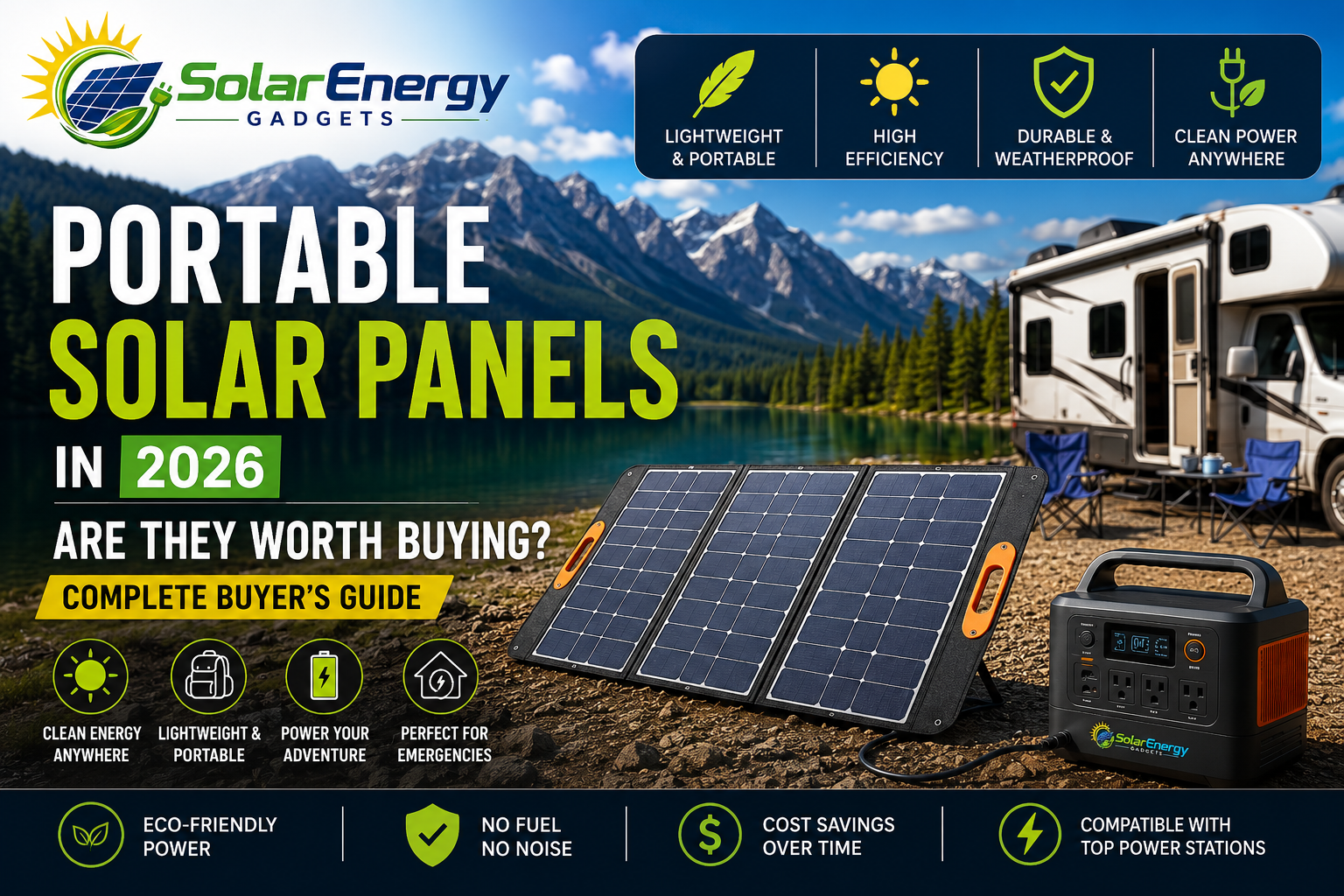
Electricity isn’t always available when you need it most. Whether you’re camping in the Rockies, road-tripping through the Canadian backcountry, boondocking in an RV across the American Southwest, or riding out a grid outage after a winter storm, portable solar panels give you a fast, clean way to generate power almost anywhere.
Unlike a rooftop solar system, portable solar panels need zero permanent installation. Unfold the panel, angle it toward the sun, plug it into a battery or power station, and you’re generating electricity within minutes. Thanks to major gains in solar cell efficiency and lightweight materials over the past few years, today’s portable panels outperform the models sold even three or four years ago — by a wide margin.
So the real question homeowners, campers, and RV owners across the US and Canada are asking in 2026 is simple: are portable solar panels actually worth buying?
The short answer: for outdoor adventures, emergency backup, and charging portable power stations, absolutely yes. They are not, however, a replacement for a full residential rooftop solar array.
This guide covers everything you need to know before buying — how portable solar panels work, their pros and cons, 2026 pricing in both USD and CAD, the best brands on the market, how to size a panel correctly, maintenance tips, and answers to the most common buyer questions.
What Are Portable Solar Panels?
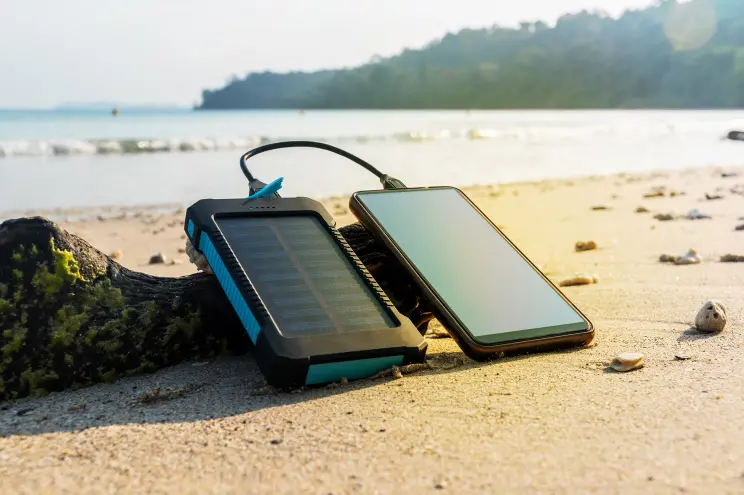
Portable solar panels are lightweight photovoltaic (PV) panels engineered to generate electricity while remaining easy to carry, fold, and store. Instead of being bolted to a roof, they collapse into compact, briefcase-style units that fit in a truck bed, RV storage bay, or hiking pack.
Most 2026 models include:
- High-efficiency monocrystalline or N-type solar cells
- Adjustable, sun-tracking kickstands
- Weather-resistant, ruggedized casings
- Built-in charging cables
- USB-A and USB-C outputs
- MC4, Anderson, and XT60 connectors
Rather than powering your entire house, portable panels are designed to charge:
- Portable power stations and solar generators
- Deep-cycle and lithium batteries
- Smartphones, tablets, and laptops
- Cameras and drones
- Small appliances and mini-fridges
How Do Portable Solar Panels Work?
Portable solar panels use photovoltaic cells to convert sunlight into direct current (DC) electricity. That electricity can then:
- Charge a standalone battery
- Power compatible DC devices directly
- Feed a portable power station
- Convert to AC power through a built-in or external inverter
The process in practice is refreshingly simple: place the panel in direct sun, connect it to your battery or generator, let the solar cells produce electricity, and let a charge controller regulate the flow so your battery stores energy safely for later. This makes portable solar an ideal off-grid solution anywhere utility power isn’t an option — from a Muskoka lakeside campsite to a Colorado trailhead.
Types of Portable Solar Panels
Not every portable panel is built for the same job. Picking the right type depends on how and where you’ll actually use it.
| Type | Best For | Portability |
| Foldable Solar Panels | Camping & travel | Excellent |
| Rigid Portable Panels | RVs & boats | Good |
| Flexible Solar Panels | Curved surfaces (van roofs, boat hulls) | Very Good |
| Solar Blankets | Backpacking & hiking | Excellent |
| Solar Suitcase Panels | RV & marine batteries | Excellent |
Key Benefits of Portable Solar Panels
Easy to Carry
Modern portable panels weigh anywhere from 2 kg to 15 kg (about 4–33 lbs), and many fold down to the size of a laptop bag or briefcase.
No Installation Required
There’s no drilling, no permits, and no electrician bill. Unfold it, aim it at the sun, and you’re generating power in minutes — a huge draw for renters and seasonal RVers who can’t install fixed solar.
Eco-Friendly Power
Portable solar panels produce renewable electricity with no fuel, no noise, no smoke, and no carbon emissions — one of the cleanest ways to keep devices charged outdoors.
Excellent for Emergencies
Severe weather and aging grid infrastructure have made power outages more common across both the US and Canada, from Texas ice storms to Ontario windstorms. A portable panel paired with a battery keeps essentials running: phones, medical devices, LED lighting, radios, Wi-Fi routers, and mini-fridges.
Lower Operating Costs
Once you’ve bought the panel, sunlight is free. Unlike a gas generator, there’s no ongoing fuel bill, no oil changes, and no trips to the pump.
Quiet Operation
Gas generators can exceed 70 dB. Portable solar panels run completely silently — ideal for national park campsites (many of which restrict generator noise), quiet residential neighborhoods, and outdoor events.
Compatible With Leading Power Stations
Most top portable panels integrate seamlessly with popular power stations from brands like Jackery, EcoFlow, Bluetti, Anker SOLIX, and Goal Zero — letting you build a flexible off-grid power system without any permanent installation.
When Portable Solar Panels Make the Most Sense
Portable solar panels are especially worth buying if you:
- Camp frequently
- Travel in an RV or camper van
- Go overlanding or vanlife full-time
- Need reliable emergency backup power
- Work remotely outdoors
- Spend time on a boat
- Want renewable charging while road-tripping across the US or Canada
For occasional outdoor use, even a compact 100W panel can comfortably keep phones, laptops, cameras, and small batteries topped up.
Who Should Avoid Buying Portable Solar Panels?
Portable solar isn’t the right fit if your goal is to:
- Power an entire house
- Fully offset your electricity bill
- Run several large appliances continuously
- Replace a residential solar installation
In those cases, a professionally installed rooftop solar system — potentially paired with federal or provincial/state incentives in the US and Canada — will deliver far greater energy output and long-term savings.
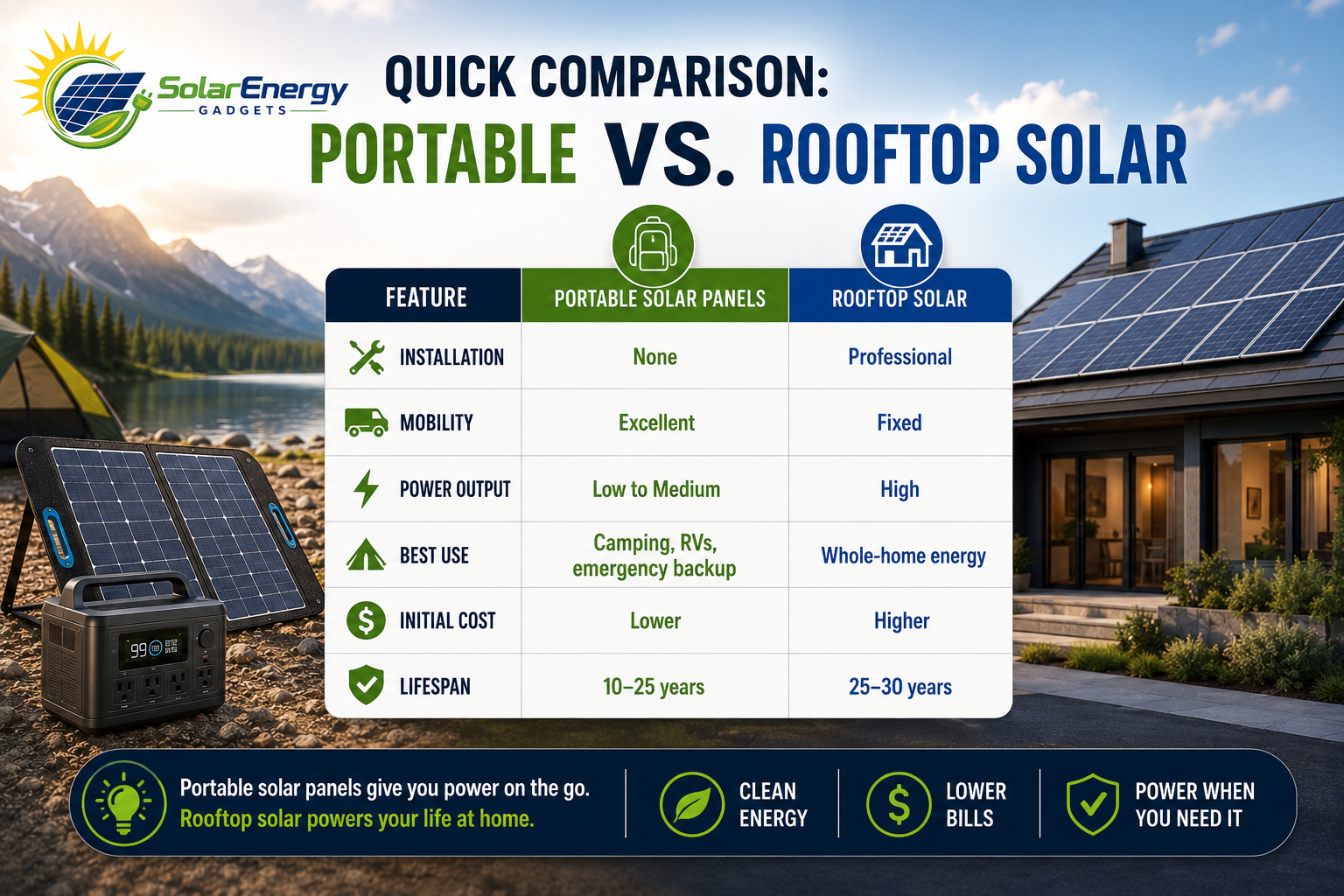
Quick Comparison: Portable vs. Rooftop Solar
| Feature | Portable Solar Panels | Rooftop Solar |
| Installation | None | Professional |
| Mobility | Excellent | Fixed |
| Power Output | Low to Medium | High |
| Best Use | Camping, RVs, emergency backup | Whole-home energy |
| Initial Cost | Lower | Higher |
| Lifespan | 10–25 years | 25–30 years |
How Efficient Are Portable Solar Panels in 2026?
Efficiency has been the single biggest leap forward in recent years. Older portable panels typically converted just 15–18% of sunlight into usable electricity. In 2026, many premium models now hit 22–25% efficiency, thanks to advances in monocrystalline and N-type solar cell technology.
Higher efficiency means more electricity from the same surface area — which is exactly why today’s compact panels are so much more practical than the bulky units of a few years ago.
Real-world output still depends on several variables:
- Direct sunlight exposure
- Panel angle and orientation
- Ambient temperature
- Shade from trees, buildings, or your own RV
- Dust, dirt, or debris on the panel surface
- Weather conditions
Even a top-rated panel underperforms on cloudy days or when partially shaded. Repositioning the panel throughout the day and keeping it clean can noticeably boost total energy production.
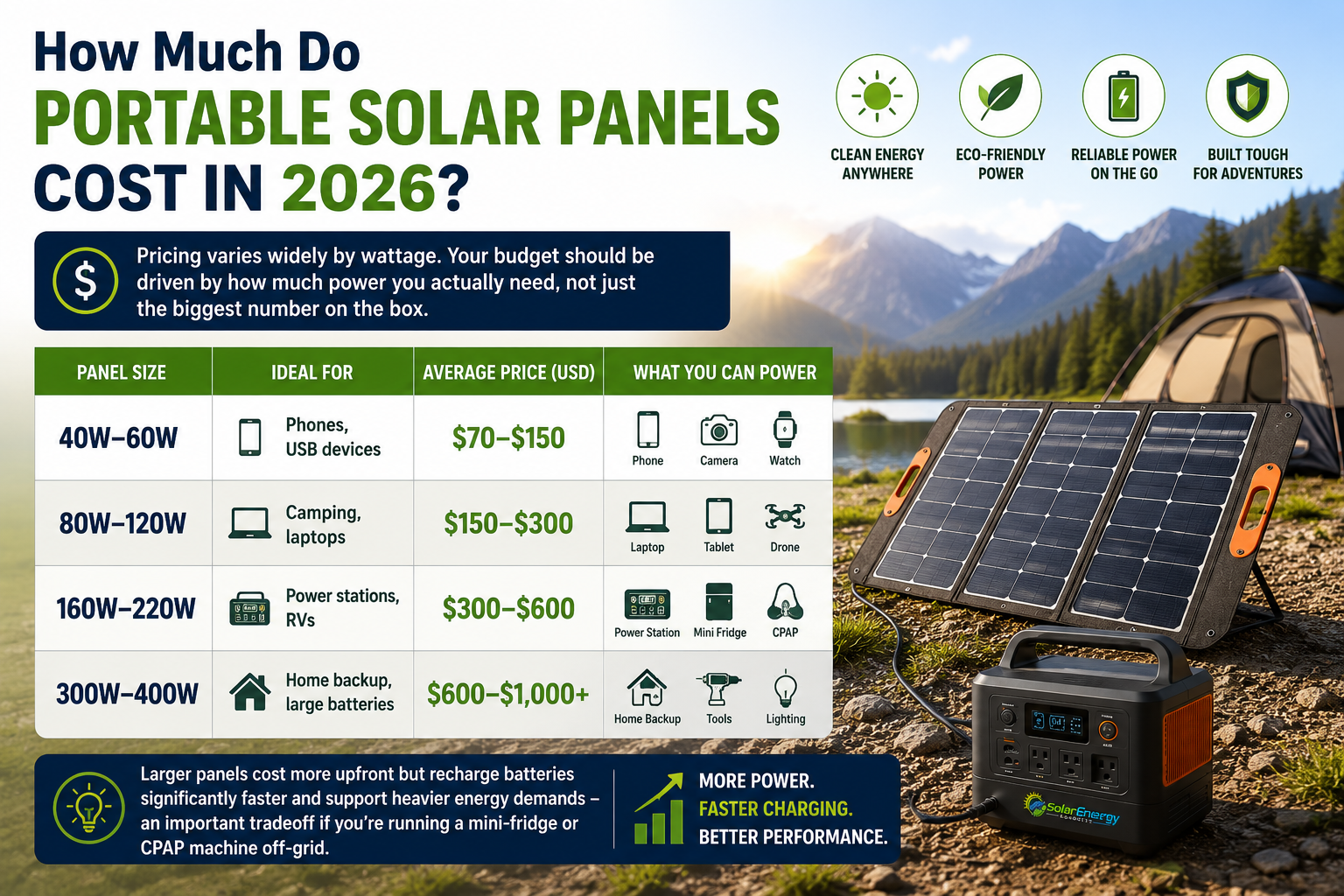
How Much Do Portable Solar Panels Cost in 2026?
Pricing varies widely by wattage. Your budget should be driven by how much power you actually need, not just the biggest number on the box.
| Panel Size | Ideal For | Average Price (USD) |
| 40W–60W | Phones, USB devices | $70–$150 |
| 80W–120W | Camping, laptops | $150–$300 |
| 160W–220W | Power stations, RVs | $300–$600 |
| 300W–400W | Home backup, large batteries | $600–$1,000+ |
Larger panels cost more upfront but recharge batteries significantly faster and support heavier energy demands — an important tradeoff if you’re running a mini-fridge or CPAP machine off-grid.
What Size Portable Solar Panel Do You Actually Need?
Choosing the right wattage matters. Go too small and you’ll be waiting hours for a charge; go too big and you’re paying for capacity you’ll never use.
50W–100W — Best for smartphones, cameras, power banks, GPS devices, and LED lights.
100W–200W — Ideal for camping, remote work, laptops, portable fridges, and small power stations.
200W–400W — Recommended for RV travel, camper vans, larger portable batteries, emergency home backup, and multi-day off-grid trips.
Best Portable Solar Panels in 2026
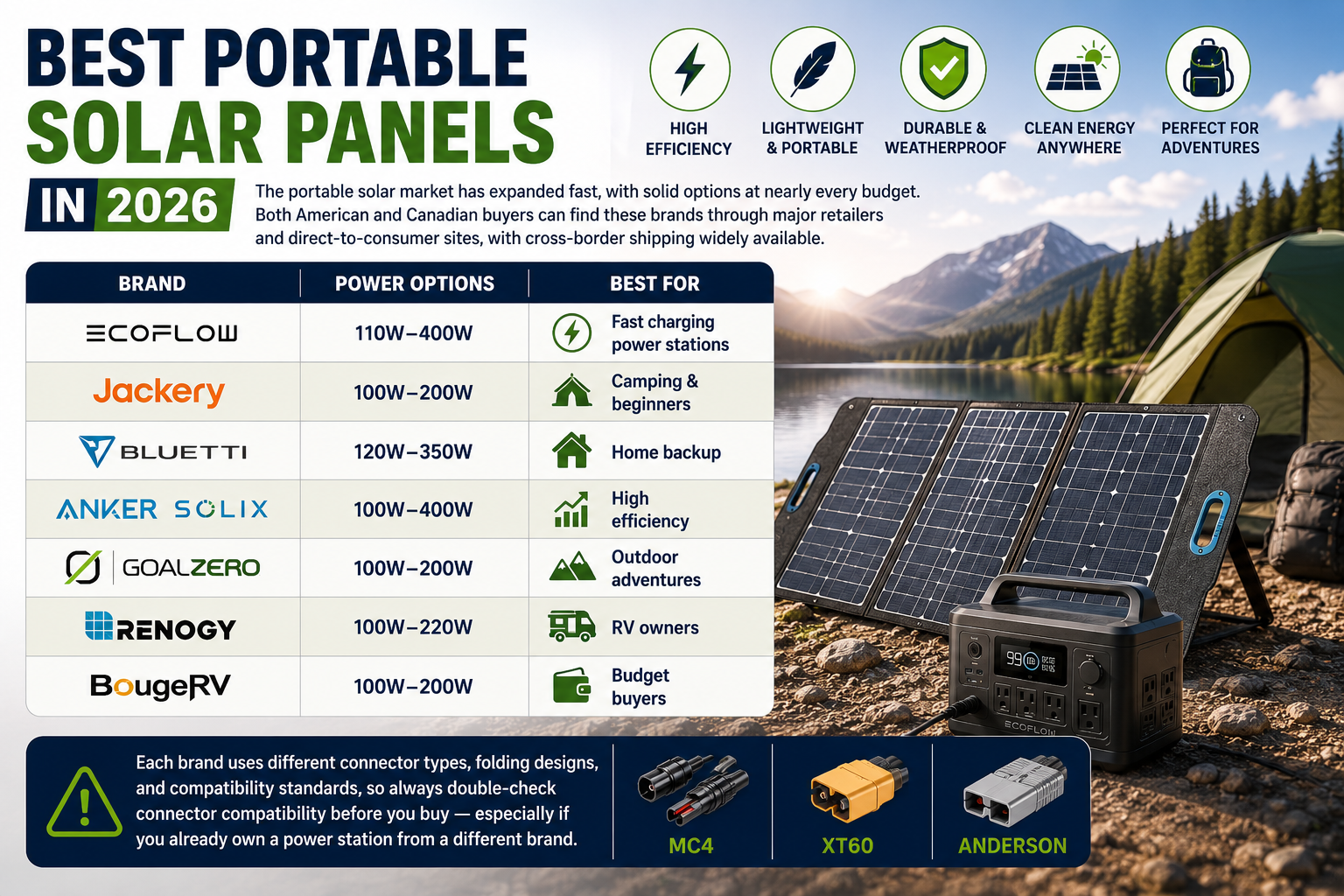
The portable solar market has expanded fast, with solid options at nearly every budget. Both American and Canadian buyers can find these brands through major retailers and direct-to-consumer sites, with cross-border shipping widely available.
| Brand | Power Options | Best For |
| EcoFlow | 110W–400W | Fast charging power stations |
| Jackery | 100W–200W | Camping & beginners |
| Bluetti | 120W–350W | Home backup |
| Anker SOLIX | 100W–400W | High efficiency |
| Goal Zero | 100W–200W | Outdoor adventures |
| Renogy | 100W–220W | RV owners |
| BougeRV | 100W–200W | Budget buyers |
Each brand uses different connector types, folding designs, and compatibility standards, so always double-check connector compatibility (MC4 vs. XT60 vs. Anderson) before you buy — especially if you already own a power station from a different brand.
Portable Solar Panels vs. Portable Solar Generators
These two product categories get confused constantly, but they solve different problems.
| Portable Solar Panels | Portable Solar Generators |
| Generate electricity | Store electricity |
| Need direct sunlight | Can supply power anytime |
| No battery included | Includes battery & inverter |
| Lightweight | Heavier |
| Lower cost | Higher cost |
The smartest setup pairs a portable solar panel with a compatible power station: generate electricity during the day, then draw on stored energy at night or during cloudy weather. This combination is what most RV owners and off-grid campers in the US and Canada actually rely on.
Features to Look for Before Buying
Not every portable panel is built the same. Prioritize these features:
Monocrystalline cells — Better efficiency and stronger low-light performance.
High conversion efficiency — Look for a rating above 22%.
Foldable design — Easier to carry, transport, and store in a vehicle.
Weather resistance — Durable materials and a solid IP rating for rain and dust exposure.
Adjustable kickstands — Let you angle the panel toward the sun for maximum output.
Multiple output options — USB-A, USB-C, MC4, XT60, and Anderson connectors give you the most flexibility.
Tips to Get the Most Power from Your Portable Solar Panel
Getting maximum output isn’t just about buying a powerful panel — how you use it matters just as much.
- Face the panel directly toward the sun.
- Reposition it every few hours as the sun moves.
- Avoid any shade, even on a small section of the panel.
- Clean the surface regularly with a soft, dry cloth.
- Use a compatible MPPT charge controller for better charging efficiency.
- Store the panel in a dry, protected spot when not in use.
Common Mistakes Buyers Make
Avoid these pitfalls when shopping for a portable solar panel:
- Choosing the cheapest option without checking efficiency ratings
- Ignoring compatibility with an existing power station
- Buying a panel too small for real energy needs
- Assuming advertised wattage holds constant in all conditions
- Leaving the panel dirty or partially shaded during use
Are Portable Solar Panels Worth Buying in 2026?
For most outdoor enthusiasts, RV owners, and emergency-preparedness-minded households across the US and Canada, the answer is yes.
Portable solar panels are a smart investment if you regularly spend time outdoors, travel in an RV, prepare for power outages, or simply want a clean way to charge devices without relying on the grid. They won’t replace a rooftop solar system for powering an entire home — but they excel at delivering reliable, renewable energy wherever you actually need it. With better efficiency, tougher builds, and stronger compatibility with today’s power stations, 2026’s models offer more real-world value than any generation before them.
Final Verdict
Portable solar panels have become one of the most practical renewable energy solutions for anyone who needs electricity away from traditional power sources. Whether you’re camping in the backcountry, traveling cross-country in an RV, prepping for the next grid outage, or simply trying to cut your reliance on utility power, they offer a genuinely convenient, eco-friendly way to stay charged.
Before you buy, think through your real energy needs, preferred wattage, portability requirements, and compatibility with any equipment you already own. A high-quality panel from a trusted brand can deliver years of dependable performance and make your off-grid adventures — wherever they take you in the US, Canada, or beyond — a whole lot more comfortable and sustainable.
Frequently Asked Questions
Do portable solar panels work on cloudy days?
Yes, but output drops compared to full sun. How much depends on cloud cover and overall light intensity.
Can portable solar panels charge a power station?
Yes. Most portable solar panels are built specifically to recharge compatible portable power stations and solar generators.
Are portable solar panels waterproof?
Many are weather-resistant, but not all are fully waterproof. Always check the manufacturer’s IP rating and avoid prolonged heavy rain exposure unless the panel is specifically rated for it.
How long do portable solar panels last?
A quality portable solar panel typically lasts 10 to 25 years with proper care and maintenance.
Can a portable solar panel power a refrigerator?
Yes, if it’s connected to a sufficiently sized battery or power station. Runtime depends on the fridge’s power draw and the battery’s total capacity.
Do portable solar panels qualify for any tax credits or rebates in the US or Canada?
Most federal residential solar tax credits are written for permanently installed rooftop systems, so portable panels typically don’t qualify. Some provinces and states do offer rebates on off-grid or emergency-preparedness equipment, so it’s worth checking local programs before you buy.
What’s the best portable solar panel for RV travel?
For most RVers, a 200W–400W panel from a brand like EcoFlow, Bluetti, or Renogy strikes the best balance of charging speed, portability, and compatibility with common RV power stations.
Solar Energy Gadgets is a premier global hub for original, expert-led solar product reviews. Our dedicated team of specialists rigorously tests the latest renewable energy technology from around the world to ensure our readers receive unbiased and practical advice. Whether you are outfitting a suburban home or looking for the best off-grid gear, we provide the insights you need to harness the power of the sun with confidence.