Why Every American Household Needs a Portable Solar Generator?
When Hurricane Helene tore through North Carolina in late 2024, millions of residents were left without power for days — some for weeks. When winter storms knock out the Texas grid, or wildfires force California evacuations, one question rings out in every affected home: “How do we keep the lights on?”
A portable solar generator — also called a solar power station or battery power station with solar panels — is one of the smartest emergency investments you can make. Unlike gas generators, they produce zero fumes, run silently, and can be recharged for free using sunlight. This beginner’s guide covers everything you need to know: what they are, how to choose the right one, top models for US buyers, and how to use them effectively during a power outage or natural disaster.
What Is a Portable Solar Generator?
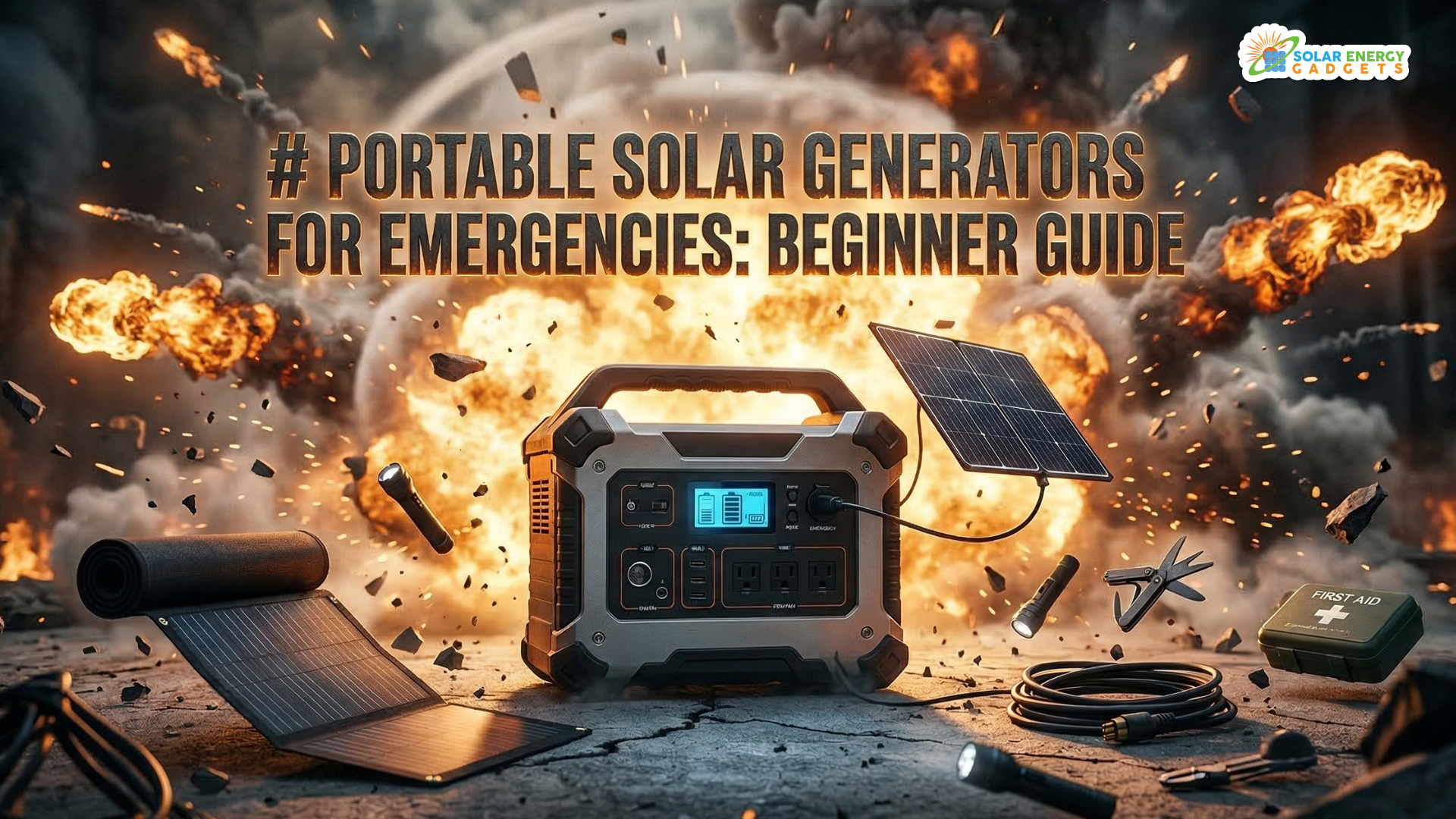
A portable solar generator is a rechargeable battery system that stores electricity and delivers it through standard AC outlets, USB ports, and DC connectors. Pair it with foldable or rigid solar panels, and you have a completely self-sufficient power source that recharges whenever the sun is out.
It is made up of three core components:
- Battery pack (lithium iron phosphate or LFP is most common in quality models)
- Inverter (converts stored DC power to usable AC power for your devices)
- Charge controller (manages how solar panels charge the battery safely)
Most modern units combine all three into a single compact box — brands like EcoFlow, Jackery, Bluetti, and Anker have popularized this all-in-one format, which has taken the US market by storm.
Portable Solar Generator vs. Gas Generator: A Side-by-Side Comparison
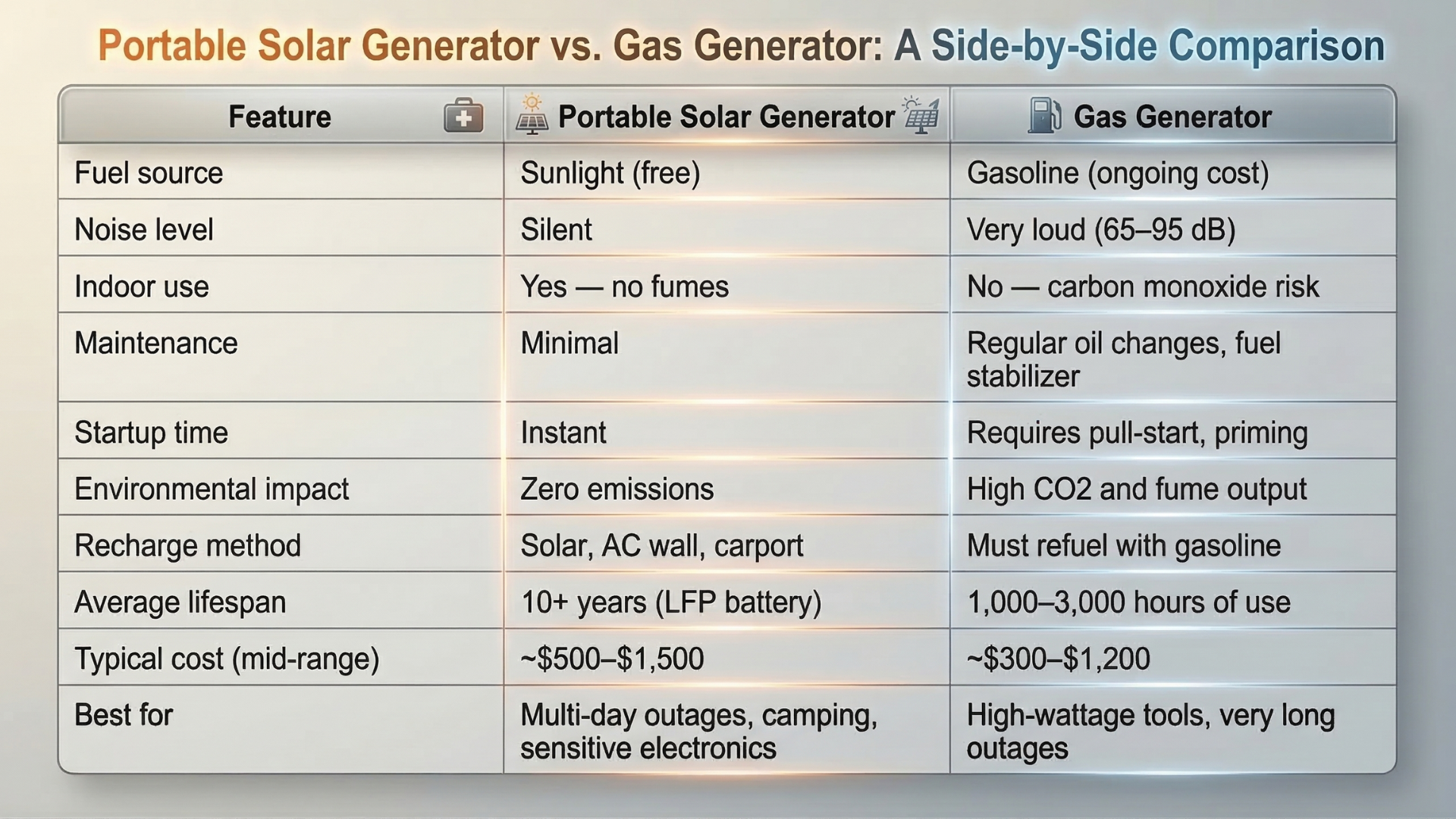
Many Americans are familiar with traditional gasoline-powered generators. Here is how they stack up against portable solar generators for emergency use:
| Feature | Portable Solar Generator | Gas Generator |
|---|---|---|
| Fuel source | Sunlight (free) | Gasoline (ongoing cost) |
| Noise level | Silent | Very loud (65–95 dB) |
| Indoor use | Yes — no fumes | No — carbon monoxide risk |
| Maintenance | Minimal | Regular oil changes, fuel stabilizer |
| Startup time | Instant | Requires pull-start, priming |
| Environmental impact | Zero emissions | High CO2 and fume output |
| Recharge method | Solar, AC wall, carport | Must refuel with gasoline |
| Average lifespan | 10+ years (LFP battery) | 1,000–3,000 hours of use |
| Typical cost (mid-range) | ~$500–$1,500 | ~$300–$1,200 |
| Best for | Multi-day outages, camping, sensitive electronics | High-wattage tools, very long outages |
For most American households dealing with weather-related outages, a portable solar generator is the safer, quieter, and more versatile choice — especially if you have children, pets, or medical equipment at home.
Real-Life Emergency Scenarios
Scenario 1: Texas Winter Blackout
A 1000Wh solar generator can:
- Power lights for 2–3 days
- Charge phones multiple times
- Run a CPAP machine overnight
Scenario 2: California Wildfire Outage
A 1500Wh system can:
- Run a mini fridge for medications
- Power Wi-Fi router for updates
- Keep essential devices running
Understanding Key Specs: What the Numbers Really Mean
Shopping for solar gadgets can feel overwhelming if you are unfamiliar with the terminology. Here is a breakdown of the most important specifications:
1. Capacity
This is the amount of energy the battery can store. Think of it like a gas tank — the bigger the Wh number, the more devices you can run and for longer.
| Capacity Range | What You Can Power | Best For |
|---|---|---|
| Under 500 Wh | Phones, tablets, small fans, and LED lights | Car camping, day trips, phone backup |
| 500–1,000 Wh | Laptop, CPAP machine, small TV, mini fridge (short bursts) | Weekend outages, tailgating, RV trips |
| 1,000–2,000 Wh | Full-size fridge (short cycles), power tools, multiple devices simultaneously | Multi-day home outages, severe weather prep |
| 2,000+ Wh | Window AC unit, sump pump, electric stove, whole-home essentials | Extended outages, off-grid cabins, serious emergency prep |
2. Output Power
This tells you how many devices you can run at the same time. A 1,000W output means you can simultaneously power devices that together draw up to 1,000 watts. Always check the wattage of your most critical appliances — like a refrigerator (150–400W) or medical equipment.
3. Solar Input
This is how fast the generator can recharge from solar panels. A unit with a 400W max solar input, paired with 2 x 200W panels, can theoretically reach full charge in 4–6 hours on a sunny day (actual results vary with angle, cloud cover, and season). In most US states, you can count on 4–6 peak sun hours per day in summer.
4. Battery Chemistry: LFP vs. NMC
| Battery Type | Cycle Life | Safety | Weight | Cost | Best For |
|---|---|---|---|---|---|
| LFP (Lithium Iron Phosphate) | 2,000–3,500+ cycles | Very high — no thermal runaway | Heavier | Higher upfront | Long-term emergency prep, home use |
| NMC (Nickel Manganese Cobalt) | 500–1,000 cycles | Good, but less stable at high temps | Lighter | Lower upfront | Backpacking, ultralight use |
For emergency preparedness in the USA, LFP is strongly recommended. Units like the EcoFlow Delta Pro and Bluetti AC200MAX use LFP and are rated for 3,500+ charge cycles — that is over 10 years of daily use.
Top Portable Solar Generators for US Buyers in 2026
Here are six well-reviewed options across different budgets and use cases. All are widely available in the United States through retailers like Amazon, Costco, REI, Home Depot, and brand websites.
| Model | Capacity | AC Output | Battery Type | Price (approx.) |
|---|---|---|---|---|
| Jackery Explorer 300 Plus | 288 Wh | 300W | LFP | ~$300 |
| EcoFlow RIVER 2 Pro | 768 Wh | 800W (X-Boost) | LFP | ~$550 |
| Jackery Explorer 1000 Pro | 1,002 Wh | 1,000W | LFP | ~$800 |
| Bluetti AC180 | 1,152 Wh | 1,800W | LFP | ~$850 |
| EcoFlow Delta 2 Max | 2,048 Wh | 2,400W | LFP | ~$1,400 |
| Bluetti AC200MAX | 2,048 Wh | 2,200W | LFP | ~$1,500 |
| Anker SOLIX C1000 | 1056Wh | 1800W | LFP | ~$900 |
*Pro tip: Watch for sale events — July 4th, Labor Day, Black Friday, and Amazon Prime Day often bring 20–40% discounts on these brands. Costco members regularly find bundle deals that include solar panels at no extra cost.
How to Choose the Right Size for Your Home
The most common mistake beginners make is buying a generator that is either too small or unnecessarily large. Use this simple three-step method:
Step 1: List your essential appliances and their wattage. Focus on what you truly cannot live without during an outage — not every device in your home.
| Appliance | Running Watts | Startup Watts | Hours/Day (Emergency) |
|---|---|---|---|
| Refrigerator (full-size) | 150–400W | Up to 1,200W | Cycles on/off — avg 8 hrs equiv. |
| CPAP machine (no heat) | 30–60W | 30–60W | 8 hours |
| LED lights (5 bulbs) | 40–50W | 40–50W | 6 hours |
| Laptop | 45–65W | 45–65W | 4 hours |
| Smartphone charging (x4) | 20–40W | 20–40W | 2 hours total |
| Small box fan | 40–100W | 40–100W | 8 hours |
| Portable space heater | 750–1,500W | 750–1,500W | 2–4 hours |
| Window AC unit (5,000 BTU) | 450–500W | Up to 1,500W | 4–6 hours |
Step 2: Add up your daily watt-hours. Multiply each appliance’s running watts by the hours you plan to use it. Sum the totals. This gives you your minimum daily energy need.
Step 3: Add a 20–30% buffer. Batteries should not be drained to 0%, and real-world solar charging is rarely at maximum efficiency. A buffer ensures you always have reserve power.
Example: A family in Texas running a fridge (800 Wh/day), a CPAP (400 Wh/night), lights and phones (200 Wh/day), and a fan (400 Wh/day) requires about 1,800 Wh/day. With a 25% buffer, they should target a system with 2,000+ Wh, such as the EcoFlow Delta 2 Max or the Bluetti AC200MAX.
Solar Panel Selection: Pairing Panels with Your Generator
A portable solar generator is only as useful as its ability to recharge. Pairing the right solar panels is critical for emergency preparedness.
| Panel Type | Efficiency | Portability | Best Use Case |
| Rigid monocrystalline | 20–24% | Low (heavy, fragile) | Permanent home setup, cabin |
| Foldable/portable monocrystalline | 18–23% | High (carry bag included) | Emergency, camping, travel |
| Flexible panels | 15–20% | Very high (rollable) | Curved surfaces, RV roofs, backpacks |
| Bifacial panels | 22–25% | Medium | Maximize output in open spaces |
For home emergency use, foldable monocrystalline panels from brands like Jackery, EcoFlow, and Bluetti are the go-to choice. A pair of 200W panels can recharge a 1,000 Wh generator in about 3–5 hours under good sun conditions — enough to restore meaningful power by midday even after running essentials overnight.
Emergency Preparedness: Practical Tips for US Homeowners
Owning a solar generator is only half the battle. Here is how to be truly ready when disaster strikes:
Before an Emergency
- Keep your battery charged to at least 80% at all times if stored for emergency use
- Store solar panels in an easily accessible location — not buried in the garage
- Create a prioritized device list, so family members know what to plug in first
- Test your setup quarterly — run your generator and confirm all outlets and ports work
- Register your unit with the manufacturer for firmware updates and warranty support
During an Outage
- Position solar panels in direct sunlight — south-facing at a 30–45 degree angle is optimal in most US states
- Avoid running all high-wattage appliances simultaneously — prioritize medical devices first
- Use your generator’s app (EcoFlow, Jackery, and Bluetti all have apps) to monitor real-time consumption and charge status
- Keep the unit in a cool, shaded location — excessive heat reduces lithium battery performance
After an Emergency
- Recharge fully before storing — partial charge for extended storage is fine (40–80% is ideal for LFP)
- Inspect cables and connectors for wear or damage
- Log how much power you used and consider whether you need more capacity
State-Specific Considerations for US Buyers
The USA’s geographic diversity means emergency power needs vary significantly by region. Here is a quick overview:
| Region/State(s) | Primary Emergency Threat | Recommended Generator Size | Solar Viability |
|---|---|---|---|
| Florida, Gulf Coast | Hurricanes, flooding | 2,000+ Wh with extra panels | Excellent — avg. 5–6 peak hours/day |
| California | Wildfires, PSPS outages | 1,500–2,500 Wh | Excellent — among the highest solar output in the US |
| Texas | Winter storms, grid failures | 2,000+ Wh (consider space heater load) | Good — 4–6 peak hours depending on season |
| Pacific Northwest (WA, OR) | Earthquakes, ice storms | 1,000–2,000 Wh | Fair — 3–4 peak hours in winter |
| Midwest / Tornado Alley | Tornadoes, ice storms | 1,000–2,000 Wh | Good — 4–5 peak hours in summer |
| Northeast (NY, NJ, MA) | Nor’easters, ice storms | 1,500–2,000 Wh | Fair — 3–4 peak hours in winter, 5 in summer |
Federal Tax Incentives and State Rebates
Here is great news many Americans miss: solar generators may qualify for financial incentives. The Inflation Reduction Act (IRA) of 2022 extended and expanded tax credits for residential clean energy equipment. Under the Residential Clean Energy Credit, solar panels and certain battery storage systems may be eligible for a 30% federal tax credit through 2032.
Additionally, many US states offer their own incentives. California, Massachusetts, New York, and Oregon, for example, have rebate programs for residential battery storage. Always check with your state energy office or consult a tax professional to understand what applies to your specific situation.
Frequently Asked Questions
Can I run my refrigerator on a portable solar generator?
Yes, but you need to account for both running watts and startup (surge) watts. A typical US full-size refrigerator draws 150–400W running, but may spike to 1,200W on startup. A generator with at least 1,500W AC output and 1,500+ Wh capacity can run a fridge in short cycles throughout the day.
How long will a portable solar generator last?
LFP battery-based units like the EcoFlow Delta Pro and Bluetti AC200MAX are rated for 3,500+ charge cycles to 80% capacity. Used daily, that is nearly 10 years. With typical emergency-only use (a few times per year), these units can last 20–30 years.
Can I use a solar generator indoors?
Absolutely — this is one of the biggest advantages over gas generators. Solar generators produce no fumes, carbon monoxide, or combustion byproducts. They are completely safe to use inside your home, RV, garage, or tent.
What is the difference between a power station and a solar generator?
A power station is the battery unit alone. A solar generator typically refers to a power station bundled with or designed to work with solar panels. All portable solar generators include a power station as the core component.
How do I charge a portable solar generator without the sun?
All portable solar generators can also be charged via a standard 110V AC wall outlet (like charging before a storm), a 12V car outlet, or a generator. Many models support simultaneous AC and solar charging to reach a full charge faster.
Final Verdict: Is a Portable Solar Generator Worth It?
For the vast majority of American households — whether you live in a hurricane zone along the Gulf Coast, a wildfire-prone area in California, or a region vulnerable to winter storms — a portable solar generator is one of the most practical emergency investments available today.
They are safer than gas generators, increasingly affordable, and capable of running everything from critical medical devices to refrigerators and communication tools during a prolonged outage. With models ranging from $300 entry-level units to $1,500+ whole-home emergency stations, there is an option for every budget.
Start with your most critical power needs, calculate your daily Wh requirement, choose an LFP-based model with adequate solar input, and pair it with quality foldable panels. You will be far better prepared than the majority of your neighbors when the next disaster strikes.